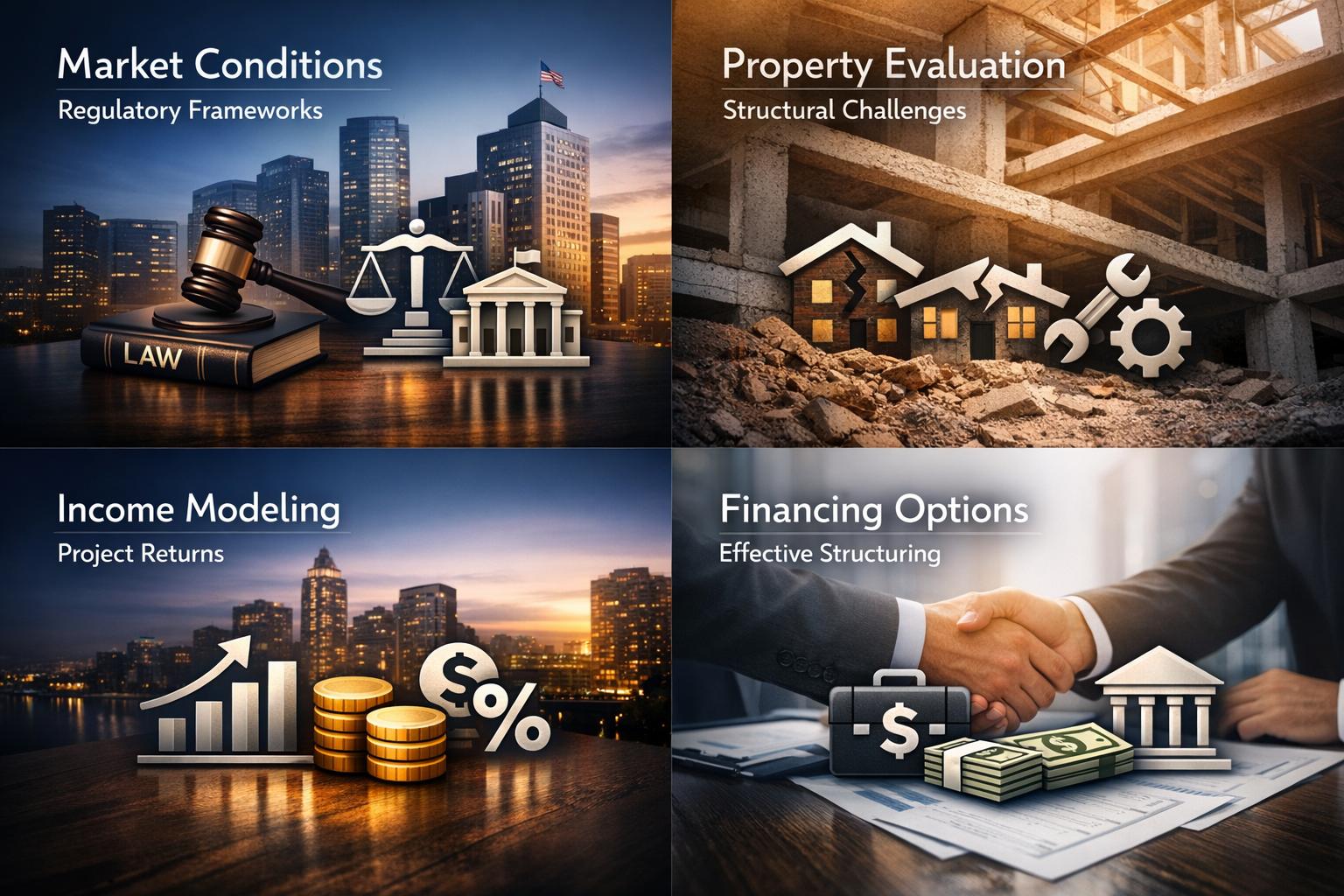
Commercial to Residential Conversion: A Growing Investment Opportunity
The commercial to residential conversion trend is transforming the real estate investment landscape, creating unprecedented opportunities for savvy investors. As work environments continue evolving and housing demand remains strong, converting commercial office spaces into residential units has become an increasingly attractive investment strategy.
This shift presents unique advantages for real estate investors who understand how to navigate the complexities of adaptive reuse projects. With regulatory changes making conversions more feasible and specialized financing options becoming more accessible, investors can capitalize on this trend to generate substantial returns while meeting market demands.
Step 1: Evaluate Market Conditions and Regulatory Environment
The first step in capitalizing on the commercial to residential conversion trend involves thoroughly assessing market conditions and regulatory frameworks that could impact your investment success.
Research jurisdictional changes: Many areas are implementing shifts in height limits and conversion rules to facilitate the transformation of commercial properties into residential developments. These regulatory modifications can significantly influence project feasibility and potential returns.
Analyze local housing demand: Strong residential demand typically supports conversion projects by ensuring adequate rental income or resale potential. Markets with favorable price-to-rent ratios often provide better investment opportunities for adaptive reuse projects.
Assess zoning flexibility: Understanding current zoning laws and potential changes helps investors identify properties with conversion potential before regulatory barriers become prohibitive.
Review permit requirements: Different jurisdictions may have varying requirements for commercial-to-residential conversions, affecting both timeline and project costs.
Step 2: Identify Suitable Properties for Adaptive Reuse Projects
Successful adaptive reuse projects begin with selecting properties that offer the best conversion potential while minimizing structural challenges and maximizing return opportunities.
Evaluate building structure and layout: Office buildings with suitable floor plates, adequate natural light, and appropriate ceiling heights typically make better candidates for residential conversion than those requiring extensive structural modifications.
Consider location factors: Properties in areas transitioning toward mixed-use developments or residential neighborhoods may offer better long-term appreciation potential and rental demand.
Assess infrastructure requirements: Buildings that already have or can easily accommodate residential utilities, parking, and amenities reduce conversion costs and complexity.
Review acquisition pricing: Commercial properties available at attractive prices relative to potential post-conversion values create better investment opportunities for adaptive reuse projects.
Step 3: Develop Mixed Use Income Modeling Strategies
Effective mixed use income modeling helps investors accurately project returns and structure their commercial to residential conversion investments for optimal performance.
Project rental income potential: Analyze comparable residential rents in the area to estimate potential income from converted units, considering factors like unit size, amenities, and market positioning.
Account for conversion costs: Include construction, permitting, and design expenses in your financial models to ensure accurate return calculations and appropriate financing needs.
Factor in timeline considerations: Conversion projects typically take longer than traditional acquisitions, so your mixed use income modeling should account for carrying costs during the conversion period.
Evaluate exit strategies: Consider both rental income potential and resale values to create flexible investment strategies that can adapt to changing market conditions.
Financing Options for Commercial Conversion Projects
Understanding available financing approaches helps investors structure deals effectively and take advantage of current market conditions for commercial to residential conversion projects.
DSCR loan opportunities: With interest rates ranging from 6.00% to 7.50% in 2026, DSCR loans may provide attractive financing for conversion projects that can demonstrate strong rental income potential post-conversion.
Bridge financing for transitions: Short-term financing options can help investors acquire properties and fund initial conversion work before transitioning to permanent financing based on the converted property's income.
Construction-to-permanent loans: These financing approaches allow investors to fund both the acquisition and conversion process under a single loan structure, potentially simplifying the financing process.
Strategic loan structuring: Proper structuring of financing can facilitate smoother approval processes and better loan terms, particularly important for adaptive reuse projects with unique characteristics.
Market Opportunities and Investment Considerations
The commercial to residential conversion trend creates specific market opportunities that investors should consider when developing their investment strategies and portfolio allocation decisions.
Target high-growth markets: Focus on markets with strong rent growth potential and favorable economic conditions that support both commercial conversions and residential demand.
Consider tax benefits: Adaptive reuse projects may qualify for various tax incentives and benefits that can enhance overall investment returns when properly structured.
Evaluate competition factors: Markets with limited new residential construction may offer better opportunities for conversion projects to capture rental demand and achieve premium pricing.
Plan for operational differences: Converting from commercial to residential use requires different property management approaches and tenant considerations that should factor into investment planning.
The commercial to residential conversion trend represents a compelling opportunity for real estate investors who approach these projects with proper planning and financing strategies. By understanding regulatory environments, identifying suitable properties, and developing accurate income models, investors can capitalize on this growing market segment.
Success in adaptive reuse projects requires careful attention to financing approaches that align with project timelines and cash flow expectations. With current DSCR loan rates and improved regulatory environments supporting conversions, investors have better tools and conditions to execute profitable commercial-to-residential transformation projects.
As this trend continues evolving, investors who position themselves early and develop expertise in mixed use income modeling and conversion financing may find significant opportunities to generate attractive returns while contributing to much-needed housing solutions in their target markets.