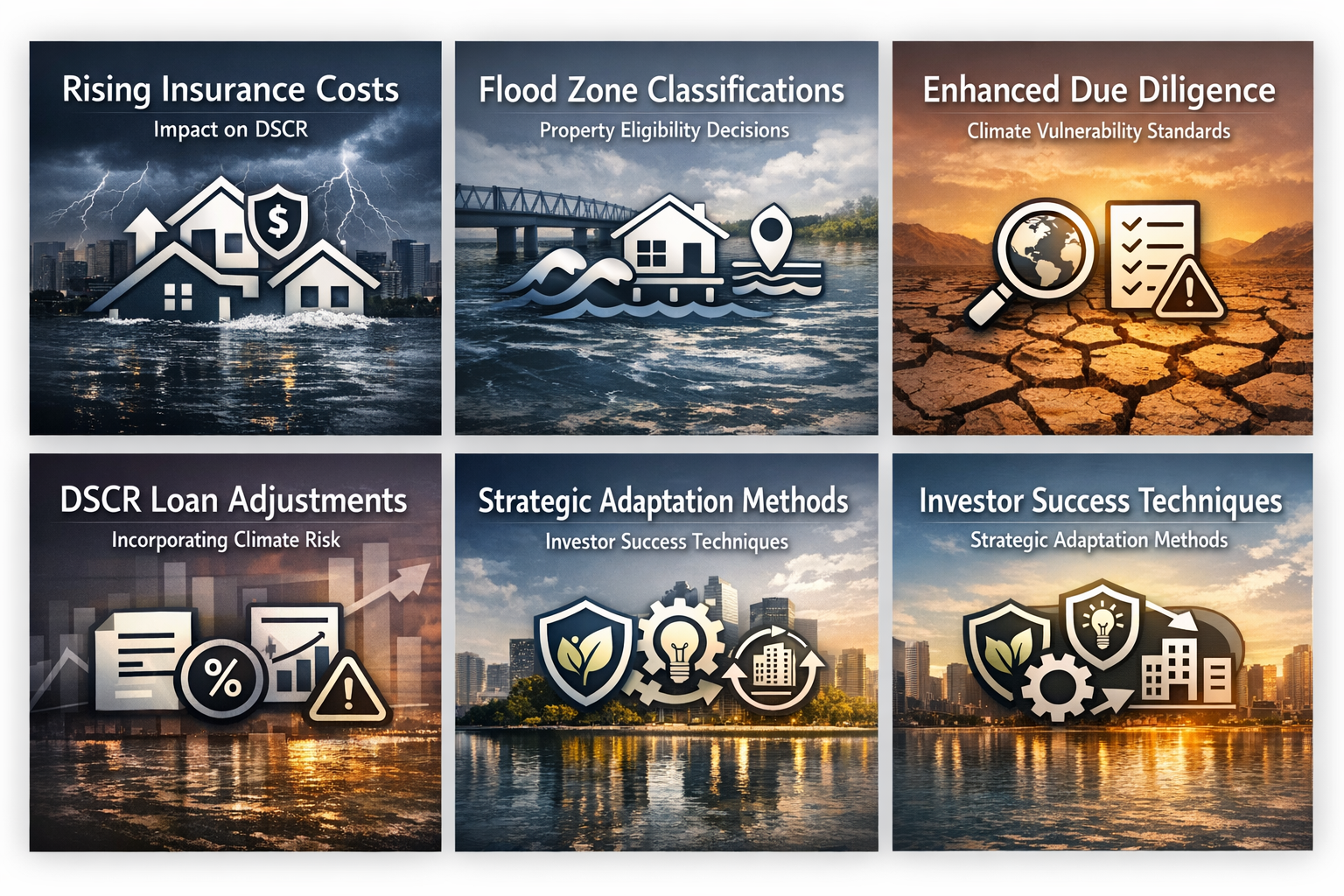
The climate risk impact on rental underwriting has become one of the most significant factors reshaping real estate investment financing today. With insurance premiums jumping 31% since 2019 due to climate-related risks, lenders are fundamentally changing how they evaluate rental property loans. These shifts affect everything from DSCR calculations to property eligibility requirements, forcing investors to adapt their acquisition strategies.
For real estate investors seeking financing for rental properties, understanding these underwriting changes isn't optional anymore. Climate risks now directly influence loan approval processes, interest rates, and investment viability. The increasing frequency of severe weather events has made flood zones and insurance cost considerations central to lender decision-making processes.
Rising insurance costs are fundamentally changing how lenders analyze property cash flow in rental underwriting processes. The dramatic increase in insurance premiums affects DSCR calculations and overall investment viability for rental properties.
Premium increases impact DSCR ratios: The 31% rise in insurance costs since 2019 directly reduces net operating income, potentially pushing properties below minimum DSCR requirements for loan approval
Operating expense projections require adjustment: Lenders now factor higher insurance cost projections into cash flow analyses, making some previously viable deals no longer qualify for financing
Regional variations affect underwriting standards: Properties in climate-vulnerable areas face more stringent cash flow requirements as lenders account for potentially escalating insurance expenses
Long-term cost modeling becomes essential: Underwriters increasingly evaluate projected insurance cost trends over the loan term rather than using current premium amounts
Flood Zone Classifications Drive Property Eligibility Decisions
Flood zones have become critical factors in determining property eligibility for rental financing. Lenders evaluate rental properties are implementing stricter guidelines for properties located in areas with elevated flood risk, fundamentally changing which investments qualify for loans.
Enhanced flood zone verification requirements: Lenders now require detailed flood zone assessments and may reject properties in high-risk areas regardless of other qualifying factors
Mandatory flood insurance calculations: Properties in designated flood zones must demonstrate cash flow viability even with required flood insurance premiums factored into operating expenses
Updated risk mapping influences decisions: Climate change has led to evolving flood risk maps, and lenders are using more current data to evaluate property eligibility
Alternative financing structures emerge: Some lenders offer modified loan terms for flood zone properties, including higher down payment requirements or reduced loan-to-value ratios
Enhanced Due Diligence Standards for Climate Vulnerability
Enhanced due diligence standards now require investors to provide comprehensive climate risk assessments as part of the rental property underwriting process. These new requirements reflect lenders' growing concern about long-term property performance and value retention.
Physical climate risk assessments: Lenders may require detailed evaluations of how climate events could impact building performance, structural integrity, and ongoing maintenance costs
Historical weather event analysis: Properties with previous climate-related damage face additional scrutiny, with lenders reviewing repair histories and potential for future incidents
Insurance availability verification: Due diligence now includes confirming ongoing insurance availability and carrier stability in climate-risk areas
Backup financial planning requirements: Some lenders require investors to demonstrate additional financial reserves for properties in climate-vulnerable locations
DSCR Loan Adjustments for Climate Risk Factors
DSCR loan programs are incorporating climate risk factors into their underwriting models, creating new challenges and opportunities for real estate investors. These adjustments reflect the evolving relationship between climate risks and rental property performance.
Higher DSCR requirements for high-risk properties: Properties in climate-vulnerable areas may need to meet elevated DSCR thresholds, typically requiring stronger cash flow to offset increased risk exposure
Seasonal income volatility considerations: Lenders evaluate how climate events might disrupt rental income, particularly in areas prone to weather-related evacuations or temporary uninhabitable conditions
Insurance cost escalation modeling: DSCR calculations now incorporate projected insurance premium increases over the loan term, requiring properties to demonstrate resilience against rising costs
Regional lending program variations: Different geographic markets may have varying DSCR requirements based on local climate risk profiles and historical loss data
Strategic Adaptation Methods for Investor Success
Strategic adaptation methods can help real estate investors successfully navigate the changing landscape of climate risk impact on rental underwriting. These approaches enable investors to maintain competitive financing access while building resilient portfolios.
Diversify geographic exposure across climate zones: Spreading investments across different climate risk profiles can help maintain overall portfolio financing eligibility and reduce concentration risk
Build larger financial reserves for climate-vulnerable properties: Maintaining higher cash reserves demonstrates financial stability to lenders and provides protection against unexpected climate-related expenses
Focus on climate-resilient property types and locations: Investing in properties with better climate adaptation features or locations with lower risk profiles may provide easier financing access and better long-term performance
Establish relationships with specialized lenders: Working with lenders who understand climate risk management can provide access to more flexible underwriting approaches and competitive financing terms for challenging properties
Implement proactive risk mitigation measures: Installing flood barriers, upgrading drainage systems, or other protective measures can improve property eligibility and potentially reduce insurance costs over time
The climate risk impact on rental underwriting represents a permanent shift in real estate investment financing. As insurance costs continue rising and climate events become more frequent, these underwriting changes will likely intensify rather than stabilize. Successful investors must now factor climate considerations into every acquisition decision, from initial property selection through financing structure.
Understanding these evolving requirements positions investors to make informed decisions about property eligibility, financing options, and long-term investment strategies. While climate risk adds complexity to rental property underwriting, investors who adapt their approaches can still find profitable opportunities and secure competitive financing in this changing market environment.