Understanding bridge loan to rental refinance timing can make or break your investment returns. With bridge loan rates typically ranging between 8% and 14.5% in 2026, knowing when and how to transition to permanent financing becomes crucial for maintaining profitability. The key lies in mastering the stabilization period, planning your exit strategy effectively, and timing your shift to more favorable long-term financing options like DSCR loans, which now offer rates as low as 5.875% to 7.375%.
Key Factors That Determine Optimal Refinancing Timing
Key factors that determine optimal refinancing timing revolve around property stabilization and market conditions. Several critical elements must align before you can successfully transition from bridge financing to permanent rental property loans.
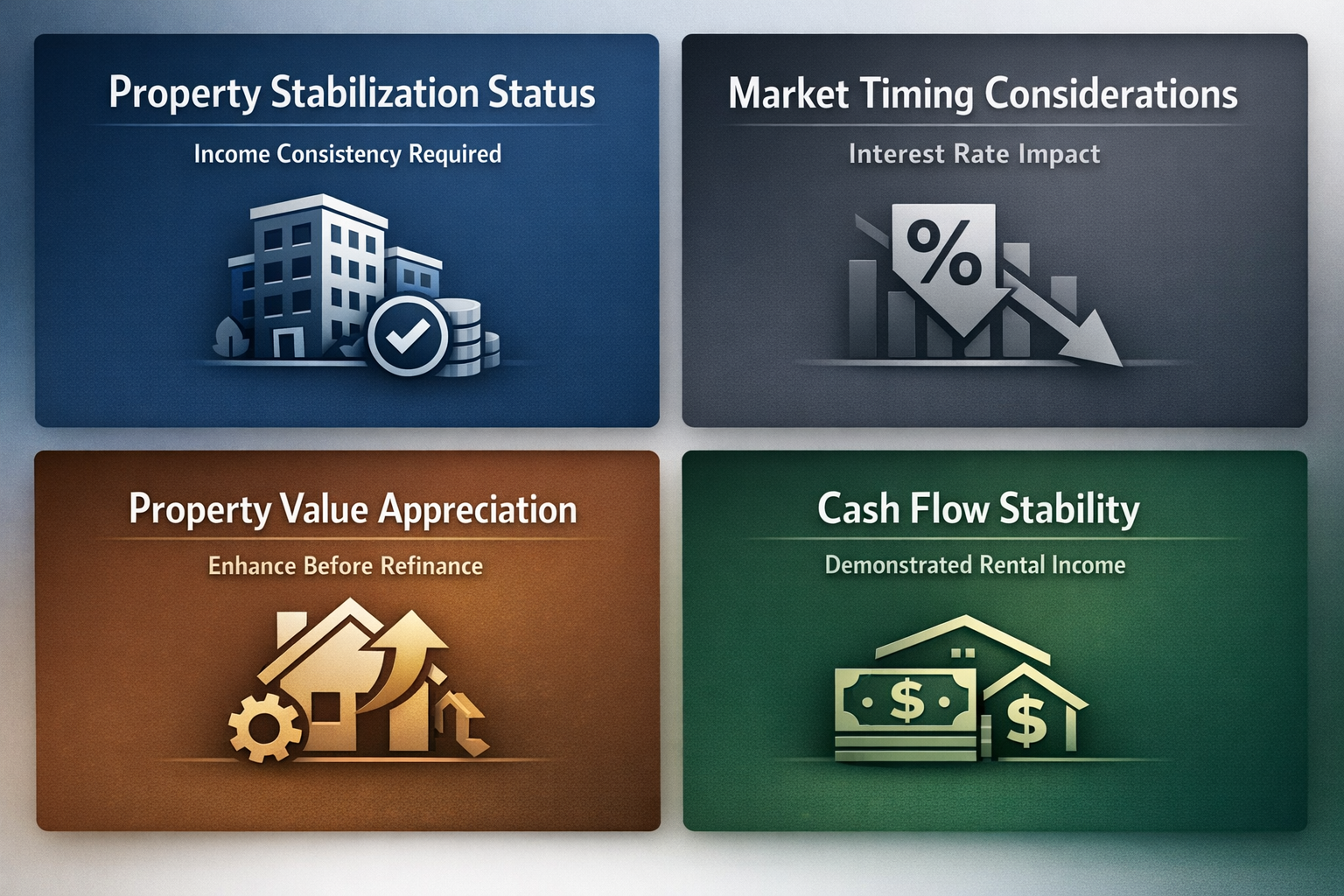
Property stabilization status: Your rental property needs to demonstrate consistent income through established lease agreements and stabilized rents that meet lender requirements for debt service coverage ratios.
Market timing considerations: Current interest rate environments significantly impact refinancing decisions, with DSCR loan rates in early 2026 dropping to 5.875% to 7.375% from previous highs of 8-9%.
Property value appreciation: Bridge loans often include funds for property improvements, allowing you to enhance value before refinancing and potentially secure better loan-to-value ratios on permanent financing.
Cash flow stability: Lenders require demonstrated rental income history, typically preferring properties with signed leases and proven payment records before approving long-term financing.
Understanding the Stabilization Period Requirements
Understanding the stabilization period requirements helps investors prepare their properties for successful refinancing transitions. The stabilization period represents the time needed to establish consistent rental income and occupancy rates that satisfy permanent lenders.
Occupancy rate benchmarks: Most lenders prefer properties to maintain occupancy rates above 85-90% for several months before considering refinancing applications, demonstrating market demand and income stability.
Lease agreement documentation: Properties need signed lease agreements with creditworthy tenants, preferably with lease terms extending beyond the refinancing timeline to provide income security.
Rent collection history: A clean track record of timely rent payments typically spanning 6-12 months strengthens your refinancing application and may improve loan terms offered by permanent lenders.
Property condition standards: The property must meet permanent lender appraisal requirements, often necessitating completion of any planned improvements or repairs initiated during the bridge loan period.
Exit Strategy Planning for Bridge Loan Success
Exit strategy planning for bridge loan success requires considering multiple refinancing pathways and market scenarios. Bridge loans offer versatile options for holding and transitioning investment properties, making strategic planning essential for optimal outcomes.
DSCR loan transition pathway: Most rental property investors target DSCR loans as their primary exit strategy, leveraging improved property performance and favorable 2026 rates to reduce borrowing costs significantly.
Conventional refinancing options: Some properties may qualify for conventional investment property loans after stabilization, potentially offering competitive rates for well-qualified investors with strong credit profiles.
Sale preparation strategy: Bridge loans provide flexibility to sell after renovations if market conditions favor disposition over long-term holding, allowing investors to capitalize on property improvements.
Portfolio refinancing considerations: Investors with multiple properties might coordinate refinancing timing across their portfolio to optimize overall financing costs and cash flow management.
Steps to Prepare for Permanent Financing Shift
Steps to prepare for permanent financing shift involve systematic preparation of documentation and property performance metrics. Following these steps increases your chances of securing favorable long-term financing terms.
Document rental income thoroughly: Compile comprehensive rent rolls, lease agreements, and payment histories that demonstrate consistent cash flow performance meeting or exceeding debt service coverage requirements for your target loan program.
Complete property improvements strategically: Finish all planned renovations and improvements before initiating the refinancing process, ensuring the property appraises at optimal value and meets permanent lender property condition standards.
Establish banking relationships early: Begin conversations with potential permanent lenders during your bridge loan period, understanding their specific requirements and positioning your property to meet their underwriting criteria effectively.
Optimize debt service coverage ratios: Fine-tune rental rates and operating expenses to achieve debt service coverage ratios that exceed minimum lender requirements, typically 1.20 or higher for most DSCR loan programs.
Prepare comprehensive financial documentation: Organize tax returns, bank statements, and property financial statements in the format required by permanent lenders, streamlining the application and approval process for faster transitions.
Timeline Optimization Strategies for Maximum Returns
Timeline optimization strategies for maximum returns focus on minimizing bridge loan carrying costs while ensuring successful permanent financing approval. Balancing speed with thoroughness often determines overall investment profitability.
Begin refinancing preparation 90 days early: Start organizing documentation and establishing lender relationships approximately three months before your target refinancing date, allowing sufficient time to address any unexpected requirements or delays.
Monitor interest rate cycles actively: Track DSCR loan rates and broader market trends to time your refinancing application during favorable rate environments, potentially saving thousands in interest costs over the loan term.
Coordinate property improvements with market timing: Schedule renovations and improvements to conclude during optimal refinancing windows, avoiding rushed work that might compromise property value or create appraisal complications.
Maintain bridge loan flexibility: Negotiate bridge loan terms that provide extension options if needed, protecting against market timing challenges or unexpected delays in property stabilization or permanent financing approval processes.
Mastering bridge loan to rental refinance timing requires careful coordination of property stabilization, market conditions, and lender requirements. With current DSCR loan rates offering significant savings compared to bridge financing costs, the potential for substantial interest expense reduction makes strategic timing even more critical. Success depends on thorough preparation during the stabilization period, clear exit strategy planning, and proactive relationship building with permanent lenders. By following these systematic approaches and maintaining flexibility in your timeline, you can optimize your transition from bridge financing to long-term rental property loans, maximizing returns while minimizing financing costs throughout your investment journey.