Securing financing for rental properties requires more than just locating an attractive deal. The best ways to prepare for rental loan approval involve strategic planning, meticulous documentation, and understanding what lenders examine during underwriting. Unlike traditional mortgage processes aimed at homebuyers, rental property loans focus heavily on the income-generating potential of your investment and your ability to demonstrate financial stability through concrete records.
Real estate investors often face challenges when transitioning from residential mortgages to investor-focused products like DSCR loans or rental property financing. Lenders evaluate rental properties differently, placing significant weight on property performance rather than solely on personal income. This shift means your preparation strategy must prioritize proving rental income stability, maintaining organized financial records, and presenting a complete picture of your investment portfolio.
In this guide, we'll walk through the critical preparation steps that can strengthen your loan application and potentially improve your approval odds. From assembling the right documents to positioning your finances strategically, these insights are drawn from current lending practices and documentation requirements that lenders typically use when evaluating rental property loan applications.
Essential Do's When Preparing for Rental Loan Approval
Understanding the essential do's when preparing for rental loan approval can significantly streamline your financing process. These proactive steps help lenders see you as a prepared, serious investor who understands the requirements and maintains professional standards in property management.
First and foremost, lenders expect to see thorough documentation that proves your rental income history. Maintaining detailed records positions you favorably during underwriting, as it demonstrates both organizational skills and transparency about property performance.
Maintain 12 to 24 months of documented rental history: Lenders typically review at least one year of rental income records to assess stability. Properties with two years of consistent income history may strengthen your application, as they show sustained tenant occupancy and reliable cash flow patterns.
Organize bank statements showing rental deposits: Clear documentation of rental payments flowing into your accounts provides verifiable proof of income. Lenders often require several months of bank statements to confirm that lease agreements translate into actual collected rent.
Prepare comprehensive rent rolls for each property: A rent roll details current tenants, lease terms, monthly rent amounts, and occupancy dates. This document helps lenders quickly understand your portfolio's income-generating capacity and tenant stability.
Gather signed lease agreements for all rental units: Active lease agreements demonstrate committed income streams. Lenders may use approximately 75% of documented lease income in their qualification calculations, making these documents crucial to maximizing your borrowing potential.
Taking these steps before you apply can reduce delays during underwriting and may improve the terms lenders offer. When your documentation tells a clear story of stable, verifiable rental income, lenders face less uncertainty and might view your application more favorably.
Critical Don'ts That Could Derail Your Rental Loan Application
Just as important as knowing what to do is understanding the critical don'ts that could derail your rental loan application. Even experienced investors sometimes make avoidable mistakes that raise red flags during underwriting or create unnecessary complications.
Many of these pitfalls stem from misunderstanding how rental property loans differ from conventional mortgages. Lenders scrutinize rental applications differently, and practices that might be acceptable for primary residence loans could create problems when you're seeking investment property financing.
Don't mix personal and rental income in the same accounts: Commingling funds makes it difficult for underwriters to verify actual rental income. Separate banking for each property or a dedicated rental business account creates clear documentation trails that lenders can easily review and validate.
Don't apply without verifying your documentation is complete: Incomplete applications slow the process and may signal disorganization to lenders. Missing documents like tax returns, property insurance records, or maintenance history can trigger additional requests that extend timelines unnecessarily.
Don't assume verbal rental agreements satisfy lender requirements: Even if you have long-term tenants, lenders typically require written lease documentation. Verbal arrangements provide no verifiable proof of income terms, lease duration, or tenant obligations that underwriters need to assess risk.
Don't neglect property condition documentation: While financial records matter most, property condition can affect loan terms. Deferred maintenance or code violations might concern lenders about the property's ability to generate consistent income or maintain its value as collateral.
Avoiding these common mistakes helps keep your application process smooth and demonstrates to lenders that you operate your rental business professionally. Attention to these details can make the difference between a straightforward approval and a delayed or declined application.
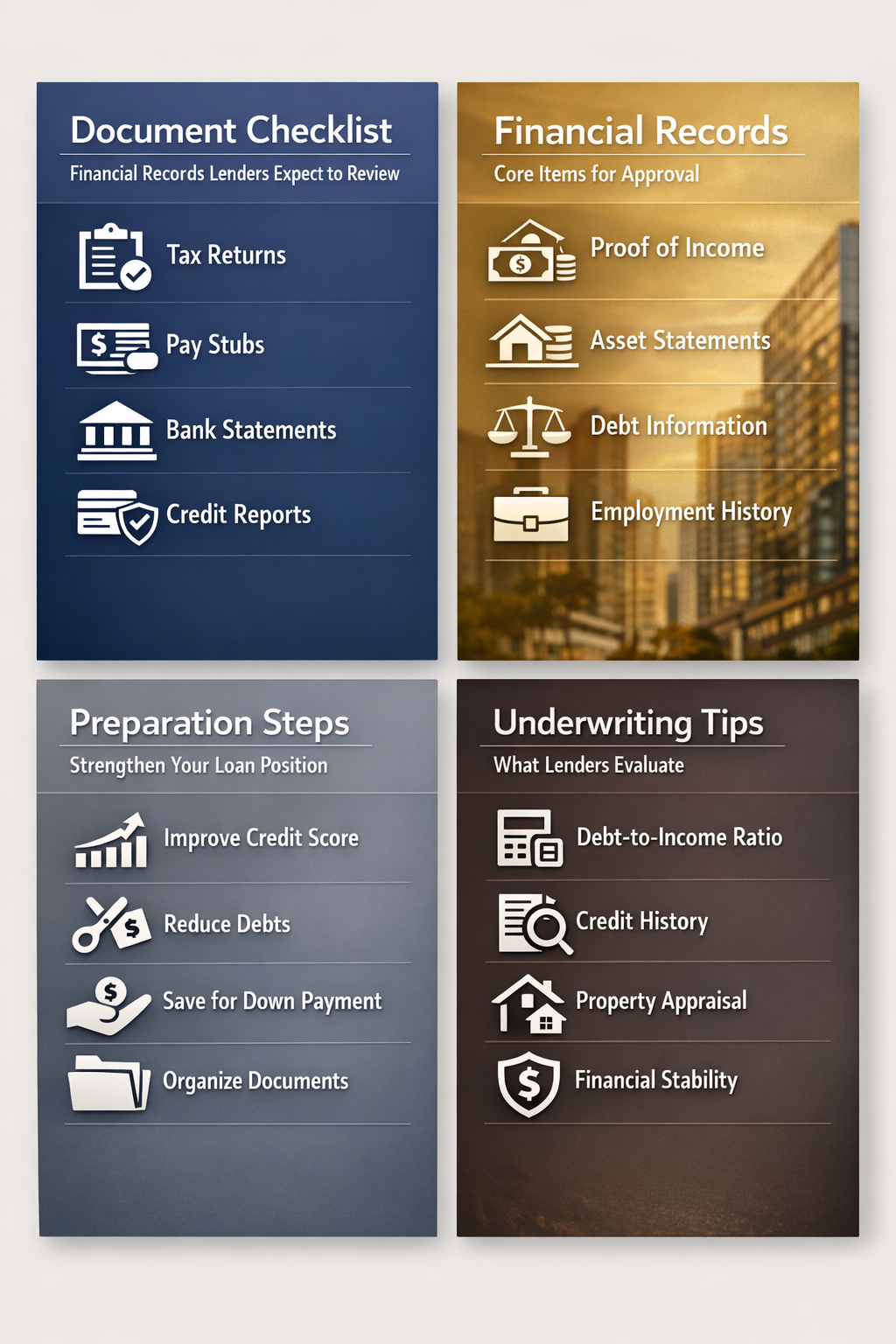
Document Checklist: Financial Records Lenders Expect to Review
Building your document checklist with financial records lenders expect to review is one of the best ways to prepare for rental loan approval. The specific documents required can vary by lender and loan type, but certain core items appear consistently across DSCR loans, rental property financing, and other investor-focused products.
Understanding this checklist before you begin allows you to gather materials systematically rather than scrambling to locate documents during underwriting. Well-organized financial records also signal to lenders that you manage your investments professionally and maintain accurate business practices.
Personal and business tax returns for the past two years: Lenders review tax returns to verify reported rental income and assess your overall financial situation. Schedule E forms on your personal returns detail rental property income and expenses, providing a comprehensive view of property performance over time.
Bank statements covering at least three to six months: Recent bank statements demonstrate current cash flow patterns and verify that rental income deposits align with lease agreements. Some lenders may request statements from multiple accounts if you maintain separate banking for different properties or business entities.
Current rent rolls for all properties in your portfolio: This document summarizes tenant information, lease terms, and monthly rental amounts across your holdings. A detailed rent roll helps lenders quickly evaluate the income-generating potential of your entire portfolio, not just the property you're financing.
Property insurance documentation and proof of coverage: Lenders require confirmation that properties carry adequate insurance to protect their collateral. Documentation should show coverage amounts, policy terms, and that premiums are current, as lapses in insurance can jeopardize loan approval.
Documentation of property expenses and capital improvements: While rental income matters most, understanding your expense structure helps lenders assess net operating income. Records of recent repairs, upgrades, or major capital expenditures provide context about property condition and your investment in maintaining asset value.
Assembling these documents in advance positions you to respond quickly to lender requests and demonstrates preparedness. Many investors find it helpful to maintain a dedicated file or digital folder for each property, updating it regularly so documentation stays current and readily accessible whenever financing opportunities arise.
Financial Preparation Steps to Strengthen Your Loan Position
Beyond documentation, taking specific financial positioning steps to strengthen your loan position can improve your approval odds and potentially secure better loan terms. These strategies focus on optimizing how lenders perceive your financial stability and the income reliability of your rental properties.
Smart financial positioning starts months before you apply, giving you time to address potential weak points in your financial profile. While you can't always control market conditions or property performance, you can control how you present your financial story to underwriters.
Reduce outstanding debt obligations before applying: Your debt-to-income ratio influences how much additional financing lenders might extend. Paying down credit cards, auto loans, or other obligations can improve your overall financial picture and potentially increase your borrowing capacity for rental property acquisitions.
Establish consistent rental income patterns for several months: Properties with recent tenant turnover or inconsistent occupancy may concern lenders. If possible, stabilize occupancy and establish a track record of consistent rental deposits before submitting applications, as this demonstrates reliable income streams.
Increase cash reserves to meet lender requirements: Many rental property loans require borrowers to maintain specific cash reserves, often equal to several months of property expenses. Building reserves not only satisfies lender requirements but also provides a financial cushion for vacancies or unexpected repairs.
Address any credit report issues or inaccuracies early: Review your credit reports well before applying to identify and dispute any errors that could negatively impact your application. Resolving credit issues takes time, so starting this process early prevents delays when you're ready to move forward with financing.
Document all property improvements that increase rental income potential: Recent renovations or upgrades that allow higher rental rates strengthen your income story. Maintain receipts and before-after documentation showing how improvements enhanced property value or enabled rent increases, as this demonstrates proactive property management.
These financial preparation steps require time and intentional effort, which is why starting early matters. Investors who address these areas months before applying typically experience smoother underwriting processes and may receive more favorable lending terms than those who apply without this preparation.
Underwriting Tips: What Lenders Evaluate During Rental Loan Review
Understanding underwriting tips about what lenders evaluate during rental loan review helps you anticipate questions and prepare stronger applications. The underwriting process for rental property loans differs significantly from conventional mortgages, with greater emphasis on property performance rather than solely borrower income.
DSCR loans, in particular, focus heavily on the debt service coverage ratio, which compares rental income to the property's debt obligations. However, even for traditional rental property loans, lenders examine multiple factors to assess risk and determine whether the property generates sufficient income to support the debt.
Rental income verification against actual collected rent: Lenders distinguish between stated rents on lease agreements and actual collected income. Bank statements showing consistent deposits that match lease terms carry more weight than lease agreements alone, as they prove tenants actually pay the agreed amounts on time.
Property location and local rental market conditions: Underwriters research local rental markets to verify that your rental rates align with area averages and that demand supports continued occupancy. Properties in markets with strong rental demand and low vacancy rates may receive more favorable consideration than those in declining or oversaturated markets.
Borrower experience managing rental properties: While not always a formal requirement, your track record as a landlord or investor can influence underwriting decisions. Investors with multiple properties showing consistent income history may be viewed as lower risk than first-time landlords, though this varies by lender and loan program.
Property condition and potential maintenance concerns: Deferred maintenance, significant repair needs, or code violations can affect loan approval or terms. Lenders want assurance that properties will continue generating income without major capital expenditures that could strain cash flow or affect your ability to service debt.
Debt service coverage and net operating income calculations: For DSCR loans specifically, the ratio of rental income to debt obligations is paramount. Lenders typically calculate net operating income by taking gross rental income and subtracting operating expenses, then compare this to mortgage payments to ensure adequate coverage, often requiring ratios above 1.0 or 1.25 depending on the program.
Knowing these evaluation criteria allows you to address potential concerns before underwriters identify them. If you anticipate questions about property condition, market rents, or income stability, proactively providing documentation or explanations can smooth the review process and demonstrates thoroughness.
Mastering the best ways to prepare for rental loan approval gives real estate investors a significant advantage when seeking financing for their properties. The preparation process centers on three core pillars: comprehensive documentation of rental income, strategic financial positioning, and understanding what underwriters examine during loan review.
Starting your preparation early allows time to address documentation gaps, improve financial metrics, and present the strongest possible application. Investors who maintain organized records throughout the year, rather than scrambling to assemble documents during the application process, typically experience faster approvals and fewer complications.
Remember that rental property financing differs fundamentally from residential mortgages. Lenders focus heavily on property performance and income reliability rather than solely on your personal financial situation. This means your lease agreements, rent rolls, bank statements showing rental deposits, and property expense documentation carry significant weight during underwriting.
While every lender has slightly different requirements, the core preparation strategies remain consistent across DSCR loans, traditional rental property financing, and other investor-focused products. By following the do's, avoiding the don'ts, assembling complete documentation, strengthening your financial position, and understanding underwriting criteria, you position yourself for smoother approvals and potentially better loan terms.
The time invested in thorough preparation typically pays dividends through faster closings, reduced stress during underwriting, and confidence that you've presented your investment in the best possible light. As you expand your rental property portfolio, these preparation habits become even more valuable, allowing you to move quickly when attractive opportunities arise.