Managing rental properties financed with loans requires more than just collecting rent checks each month. Real estate investors face a unique set of challenges, from fluctuating interest rates to unexpected maintenance costs that can eat into returns. Understanding the best strategies for managing rental loan risk is essential for protecting your investment and ensuring steady cash flow over the long haul.
Whether you're working with DSCR loans, traditional rental property financing, or bridge loans, the risks associated with leveraged real estate investments remain consistent. Interest rate shifts can impact your monthly obligations, tenant turnover can disrupt income streams, and insufficient reserves can leave you vulnerable when repairs arise. That's why having a solid risk management framework isn't optional, it's a cornerstone of successful property investing.
This guide walks through practical, actionable strategies that real estate investors can implement to minimize exposure and maximize profitability. From understanding your loan structure to maintaining adequate reserves, these approaches are grounded in real-world practices that work across different market conditions and property types.
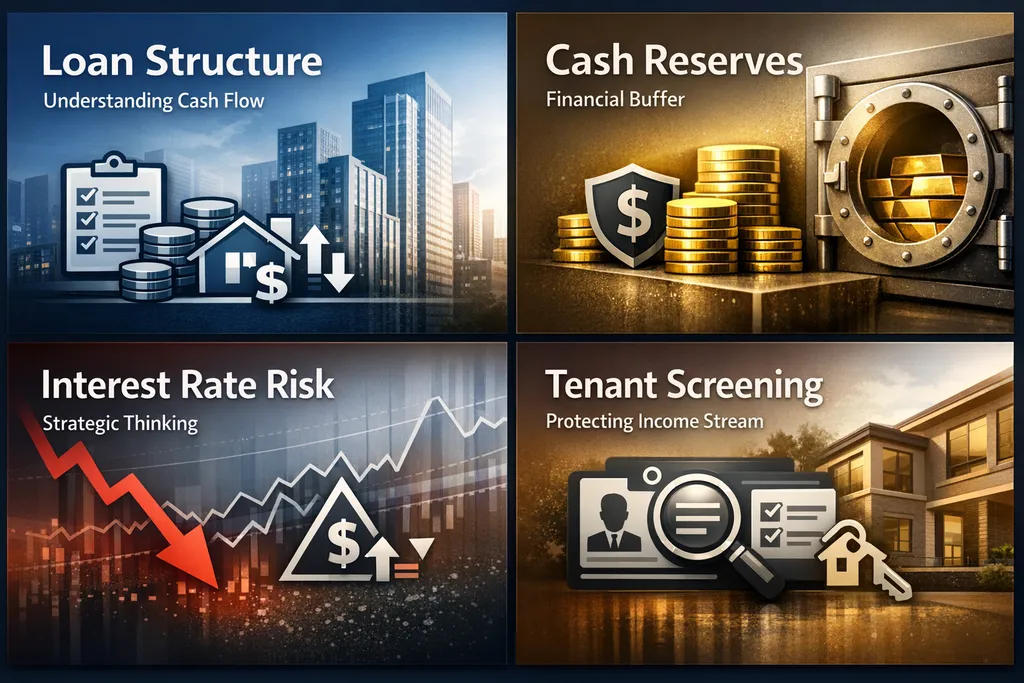
Understanding Your Loan Structure and Cash Flow Requirements
Understanding your loan structure and cash flow requirements forms the foundation for managing rental loan risk effectively. Before you can protect your investment, you need to know exactly what you're working with and what your property needs to generate each month.
Calculate your debt service coverage ratio regularly: Your DSCR tells you whether rental income adequately covers your loan payments. Most lenders look for a ratio above 1.25, meaning your property generates 25% more income than your debt obligations. Tracking this metric helps you spot cash flow problems before they become critical.
Map out fixed versus variable costs: Fixed costs like principal and interest payments on fixed-rate loans remain consistent, while variable expenses such as property taxes, insurance, and maintenance fluctuate. Knowing the difference helps you forecast more accurately and identify where flexibility exists in your budget.
Identify break-even points and margin thresholds: Every rental property has a break-even occupancy rate where income covers all expenses. Understanding this threshold allows you to assess how much cushion you have when vacancies occur or costs rise unexpectedly.
Review loan terms for prepayment penalties and rate adjustment clauses: Some loan products include penalties for early payoff or contain adjustment clauses that could increase your payments. Knowing these details upfront prevents surprises and allows you to plan refinancing strategies more effectively.
Cash flow management becomes significantly easier when you have a clear picture of your loan obligations and how they interact with property income. Many investors run into trouble because they underestimate the impact of even small changes in occupancy or expenses. By maintaining detailed records and regularly reviewing your numbers, you can make informed decisions about when to refinance, when to raise rents, and when to build reserves.
Building and Maintaining Adequate Cash Reserves
Building and maintaining adequate cash reserves represents one of the most practical defenses against rental loan risk. Reserves act as a financial buffer that protects you when unexpected expenses arise or when rental income temporarily drops due to vacancies or tenant issues.
Set aside three to six months of operating expenses: This reserve level typically covers most short-term disruptions without forcing you to tap into personal funds or take on additional debt. Operating expenses include your loan payment, property taxes, insurance, utilities, and average maintenance costs.
Create separate reserve accounts for capital expenditures: Major systems like roofs, HVAC units, and water heaters have predictable lifespans. Setting aside funds specifically for these replacements ensures you're not caught off guard when expensive items reach the end of their useful life.
Automate reserve contributions from rental income: Treat reserve building like any other expense by automatically transferring a portion of each rent payment into your reserve account. This discipline removes the temptation to skip contributions when cash flow feels comfortable.
Replenish reserves immediately after withdrawals: When you do need to use reserve funds, prioritize rebuilding them as quickly as possible. A depleted reserve leaves you vulnerable to the next unexpected event, which might arrive sooner than anticipated.
Reserves provide peace of mind and operational flexibility that can't be overstated. Investors without adequate reserves often find themselves making poor decisions under pressure, such as accepting problematic tenants, delaying necessary repairs, or even facing loan default during extended vacancies. The discipline of maintaining reserves might feel like it slows wealth building in good times, but it's precisely what keeps your investment viable during challenging periods.
Protecting Against Interest Rate Risk
Protecting against interest rate risk requires strategic thinking about loan products and timing. Interest rate fluctuations can significantly impact your monthly debt service and overall profitability, making this a critical area for risk management.
Evaluate fixed-rate versus adjustable-rate loan products: Fixed-rate loans provide payment certainty over the entire loan term, which simplifies budgeting and protects against rising rates. Adjustable-rate products might offer lower initial rates but expose you to payment increases if rates climb.
Monitor refinancing opportunities when rates drop: Refinancing can lower your monthly payments and improve cash flow when rates decline. However, you'll need to weigh closing costs and any prepayment penalties against the potential savings to determine if refinancing makes financial sense.
Consider rate locks during loan origination: When applying for new financing, rate locks can protect you from increases during the application and closing period. This protection might be particularly valuable in rising rate environments.
Assess the impact of rate changes on investment returns: Small rate increases can meaningfully affect your return on investment over time. Running scenarios with different rate assumptions helps you understand your exposure and plan accordingly.
Interest rate risk management often gets overlooked because rates feel abstract until they directly impact your monthly payment. Yet this represents one of the most significant variables in rental property investing. Investors working with DSCR loans or other investor-focused products should pay particular attention to rate structures since these loans may have different adjustment mechanisms than traditional mortgages. Understanding how and when your rate might change allows you to plan proactively rather than react to payment increases you didn't anticipate.
Selecting the Right Mortgage Products for Your Investment Strategy
Selecting the right mortgage products for your investment strategy directly impacts your ability to manage rental loan risk effectively. Different loan types serve different purposes, and matching the product to your goals helps optimize both performance and protection.
Match loan terms to your holding period: If you plan to hold a property long-term, a fixed-rate loan might provide stability and predictability. For properties you intend to renovate and sell quickly, fix and flip financing or bridge loans with shorter terms and flexible payoff options could be more appropriate. Aligning loan duration with investment timeline reduces the risk of being stuck with the wrong financing at the wrong time.
Understand qualification criteria and how they affect loan structure: DSCR loans qualify based on property cash flow rather than personal income, which can be advantageous for investors with multiple properties. However, these products might carry different rate structures or reserve requirements. Knowing what you qualify for and how different products are structured helps you choose financing that matches your risk tolerance.
Compare loan costs including origination fees and ongoing expenses: Total loan costs extend beyond the interest rate to include origination fees, points, servicing fees, and potential penalties. A loan with a slightly higher rate but lower upfront costs might actually be more economical depending on your holding period and cash position.
Evaluate flexibility for future modifications or payoffs: Investment strategies evolve, and the ability to modify your loan terms or pay off early without penalties provides valuable flexibility. Some loan products offer more adaptability than others, which can be crucial when market conditions change or when opportunities arise to improve your capital structure.
The mortgage product you select sets the framework for your entire investment timeline. Investors sometimes focus exclusively on getting the lowest rate without considering how loan features align with their strategy. A product that looks attractive on paper might create challenges down the road if it doesn't match your actual needs and risk profile.
Implementing Rigorous Tenant Screening and Lease Management
Implementing rigorous tenant screening and lease management helps protect the income stream that services your rental loan. Tenant-related issues represent one of the most common sources of financial stress for property investors, yet they're also among the most controllable risks.
Establish objective tenant screening criteria before marketing properties: Develop clear, consistent standards for credit scores, income levels, rental history, and background checks. Objective criteria applied uniformly help you select reliable tenants while protecting you from fair housing violations. Documentation of your process and decisions provides an additional layer of protection.
Verify income and employment thoroughly: Tenant income should typically be at least three times the monthly rent to ensure they can comfortably afford payments. Verifying employment directly with employers and reviewing recent pay stubs or tax returns helps confirm applicants can meet their obligations consistently.
Check references from previous landlords: Current landlords might be motivated to provide positive references for problematic tenants they want to remove, so contacting the landlord before the current one often yields more honest feedback. Ask specific questions about payment history, property care, and any lease violations.
Create comprehensive lease agreements that protect your interests: Well-drafted leases clearly outline tenant responsibilities, payment terms, maintenance expectations, and consequences for violations. Including provisions for late fees, property inspections, and early termination protects your investment while setting clear expectations from the beginning.
Strong tenant screening might feel time-consuming upfront, but it pays dividends through reduced vacancies, fewer payment issues, and lower turnover costs. Investors who skip thorough screening to fill units quickly often face extended problems that far exceed any short-term vacancy loss. Remember that your loan payment comes due regardless of whether you have a paying tenant in place, making tenant quality directly tied to your ability to manage loan risk effectively.
Maintaining Properties and Managing Unexpected Expenses
Maintaining properties and managing unexpected expenses protects both your asset value and your ability to service debt. Deferred maintenance and surprise repairs represent significant threats to cash flow and loan performance.
Conduct regular property inspections: Quarterly or semi-annual inspections help you identify small issues before they become expensive problems. Catching a minor roof leak early might cost a few hundred dollars, while ignoring it could lead to thousands in structural damage. Regular inspections also ensure tenants are maintaining the property appropriately according to lease terms.
Develop preventive maintenance schedules for major systems: HVAC systems, plumbing, electrical components, and appliances all benefit from regular servicing that extends their lifespan and prevents failures. Scheduling routine maintenance during tenant turnover or slow seasons minimizes disruption and helps you avoid emergency repairs at premium prices.
Build relationships with reliable contractors before emergencies occur: Having vetted plumbers, electricians, and general contractors lined up before you need them urgently saves time and money. Contractors you've worked with previously understand your properties and expectations, often providing better service and more reasonable pricing than emergency calls to unknown vendors.
Document all maintenance and improvement expenses: Detailed records serve multiple purposes, from tax deductions to demonstrating property care for refinancing or resale. Documentation also helps you track which systems might be approaching replacement age and budget accordingly.
Property maintenance directly impacts your ability to attract and retain quality tenants, which in turn affects your capacity to cover loan obligations. Investors who neglect maintenance find themselves in a downward spiral where property condition deteriorates, good tenants leave, and income becomes increasingly unreliable. Proactive maintenance costs money in the short term but preserves value and cash flow over time.
Putting It All Together: Your Risk Management Framework
Putting it all together means creating a comprehensive risk management framework that addresses loan structure, reserves, interest rate exposure, product selection, tenant quality, and property maintenance. These strategies work best when implemented as an integrated system rather than isolated tactics. Successful investors recognize that managing rental loan risk isn't about eliminating all uncertainty, that's impossible. Instead, it's about understanding your exposure, preparing for likely scenarios, and maintaining the flexibility to adapt when conditions change. The investors who thrive over multiple market cycles are typically those who respect risk without letting it paralyze decision-making. By consistently applying these best strategies for managing rental loan risk, you position yourself to weather short-term challenges while building long-term wealth through real estate. Your loan becomes a tool for leverage rather than a source of stress when you approach it with knowledge, preparation, and discipline.
Managing rental loan risk effectively separates investors who build sustainable portfolios from those who struggle through every market shift. The strategies outlined here, from understanding loan structures and maintaining reserves to protecting against interest rate risk and screening tenants rigorously, provide a framework that works across different property types and market conditions.
Real estate investing with leverage will always carry inherent risks. Interest rates fluctuate, tenants create challenges, and properties require unexpected repairs. However, investors who approach these realities with preparation and sound systems tend to navigate difficulties far better than those caught unprepared. The time you invest in understanding your loan products, building reserves, and implementing strong management practices pays returns that compound over years and decades.
Remember that risk management isn't a one-time exercise but an ongoing practice. Markets evolve, your portfolio grows, and your strategies should adapt accordingly. Regular reviews of your loan performance, reserve levels, and property conditions keep you ahead of potential problems rather than constantly reacting to crises. When you treat risk management as a core competency rather than an afterthought, you create a foundation for long-term success in rental property investing.