Real estate investors are increasingly turning to DSCR loans as their preferred financing method, particularly with rates having dropped significantly from 2024 levels to approximately 6.00% to 7.50%. These income-based loans offer a streamlined path to portfolio expansion without traditional income documentation requirements. However, not all rental properties are created equal when it comes to DSCR qualification and long-term profitability. Understanding which property types consistently generate the strongest debt service coverage ratios can make the difference between a mediocre investment and a cash-flowing powerhouse.
Single Family Rental Properties: The DSCR Foundation
Single family rentals typically represent the most accessible entry point for investors seeking the best rental properties for DSCR financing. These properties often provide stable rental income streams that lenders can easily evaluate and underwrite.
Consistent Market Demand: Single family homes in growing suburban markets tend to attract long-term tenants, creating predictable cash flow patterns that support strong DSCR calculations
Lower Maintenance Complexity: Compared to larger properties, single family rentals often have more manageable operating expenses, which can improve your debt service coverage ratio by keeping costs controlled
Easier Exit Strategies: These properties typically offer multiple exit options, including sale to owner-occupants or other investors, providing flexibility if your investment strategy changes
Geographic Diversification Opportunities: Single family rentals allow investors to spread risk across different neighborhoods and markets without requiring massive capital outlays
Multifamily Properties: Scaling Your DSCR Portfolio
Multifamily deals often present compelling opportunities for investors who've mastered the fundamentals and are ready to scale their operations. These properties can generate multiple income streams from a single asset, potentially creating stronger DSCR ratios.
Income Diversification: Multiple rental units mean that vacancy in one unit doesn't eliminate all cash flow, creating more stable income patterns that lenders favor in DSCR calculations
Economies of Scale: Property management, maintenance, and improvement costs can often be spread across multiple units, potentially improving your overall operating margins
Value-Add Potential: Multifamily properties frequently offer opportunities for rent increases, unit improvements, or operational efficiencies that can boost your DSCR over time
Institutional Interest: Larger multifamily assets may attract interest from institutional buyers when you're ready to sell, potentially commanding premium valuations
Mixed Use Assets: Maximum Income Potential
Mixed use assets represent an often-overlooked category among the best rental properties for DSCR loans, combining residential and commercial income streams in a single investment. These properties can provide enhanced cash flow diversity that strengthens DSCR performance.
Multiple Revenue Streams: Combining residential units with commercial spaces like retail or office can create complementary income sources that perform differently across economic cycles
Premium Rent Potential: Commercial tenants often pay higher per-square-foot rents than residential tenants, potentially boosting your overall property income and DSCR ratio
Tenant Stability Benefits: Business tenants typically sign longer leases than residential renters, providing more predictable long-term cash flow for DSCR calculations
Urban Market Advantages: Mixed use properties often perform well in walkable urban areas where zoning supports diverse property uses and tenant demand remains strong
Geographic Markets That Support Strong DSCR Performance
Location plays a crucial role in determining which properties will generate the rental income necessary to achieve optimal DSCR ratios. Understanding market fundamentals helps investors identify areas where rental properties are most likely to succeed.
Growing Employment Markets: Areas with expanding job markets and diverse industries typically support steady rental demand and rent growth, contributing to stronger long-term DSCR performance
University and Medical Hub Locations: Properties near major universities or medical centers often benefit from consistent rental demand from students, staff, and professionals who need housing
Transit-Accessible Areas: Properties with good public transportation access or proximity to major highways may command rent premiums and experience lower vacancy rates
Emerging Suburban Markets: Areas experiencing population growth but not yet fully developed may offer opportunities to acquire properties before significant rent appreciation occurs
Essential Steps for DSCR Property Analysis
Successfully identifying the best rental properties for DSCR loans requires a systematic approach to property evaluation. These steps can help ensure your investment will meet lender requirements and generate attractive returns.
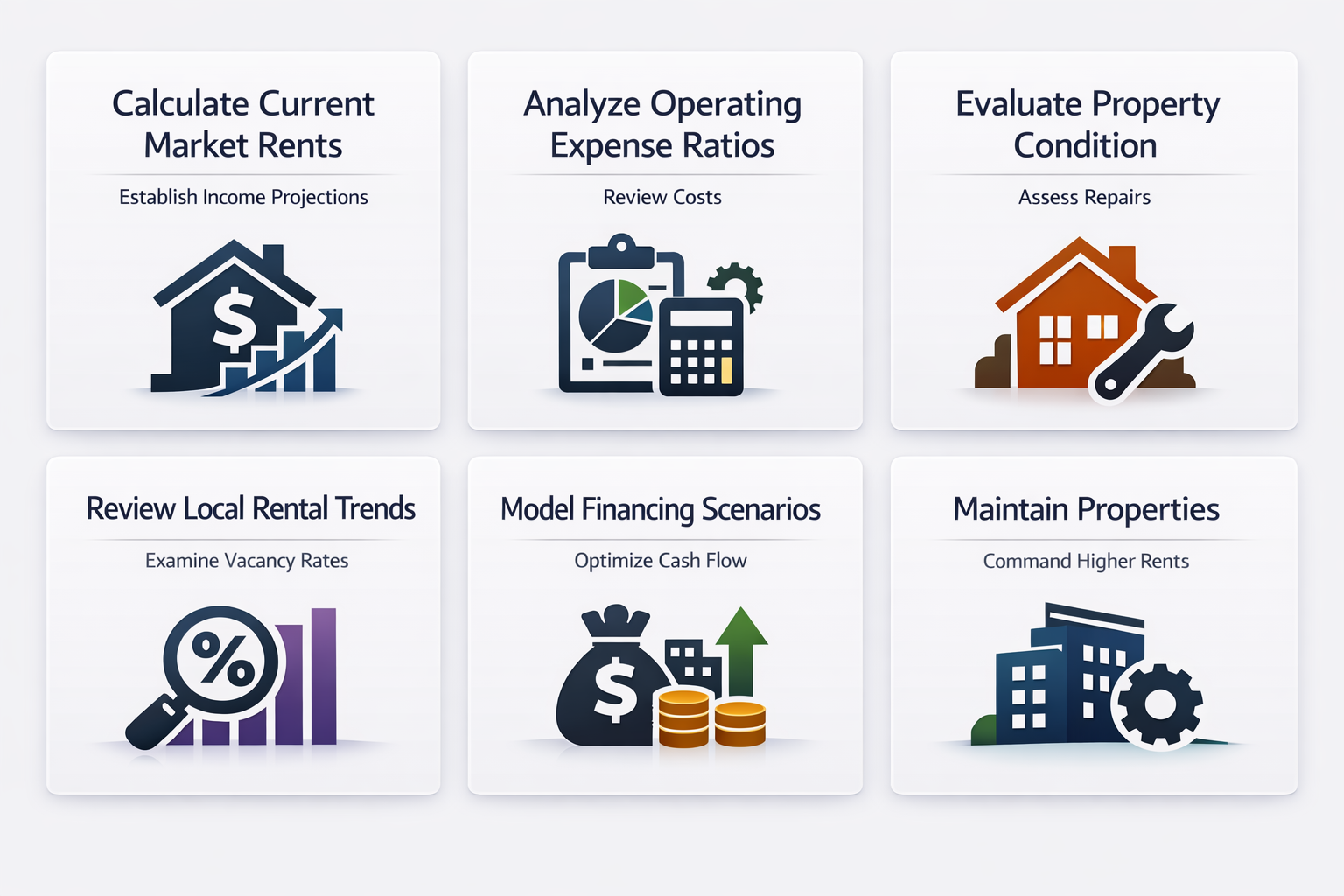
Calculate Current Market Rents: Research comparable rental properties in the immediate area to establish realistic income projections, as DSCR loans typically require properties to achieve at least a 0.75 to 1.25 ratio depending on the lender
Analyze Operating Expense Ratios: Review property taxes, insurance costs, maintenance histories, and management fees to create accurate expense projections that will impact your debt service coverage calculations
Evaluate Property Condition and Capital Needs: Assess any immediate repairs or improvements required, as these costs will affect your initial cash flow and may impact your ability to achieve target DSCR ratios
Review Local Rental Market Trends: Examine vacancy rates, rent growth patterns, and new supply coming to market to gauge the sustainability of your projected rental income over time
Model Different Financing Scenarios: Compare how various loan amounts, interest rates, and terms would affect your DSCR to optimize your financing structure for maximum cash flow and qualification strength
Optimizing Your Property Portfolio for DSCR Success
Building a portfolio of rental properties that consistently qualifies for favorable DSCR financing requires strategic planning and ongoing optimization. These approaches can help maximize your success with debt service coverage ratio lending.
Maintain Properties Above Market Standards: Well-maintained properties typically command higher rents and experience lower vacancy rates, both of which contribute to stronger DSCR performance and easier refinancing opportunities
Implement Strategic Rent Increases: Regular, market-appropriate rent adjustments help ensure your properties keep pace with inflation and maintain strong debt service coverage ratios over time
Build Relationships with DSCR Lenders: Developing ongoing relationships with lenders who specialize in investment property financing can provide access to better terms and faster approval processes for future acquisitions
Monitor Market Fundamentals Regularly: Stay informed about local employment trends, new development, and demographic shifts that could affect rental demand and property values in your target markets
Consider Professional Property Management: Experienced property managers may help optimize rental income, reduce vacancy periods, and maintain properties more efficiently than self-management, potentially improving overall DSCR performance
Identifying the best rental properties for DSCR loans requires balancing multiple factors including property type, location, market fundamentals, and your individual investment strategy. With DSCR loan rates currently ranging from approximately 6.00% to 7.50% and qualification possible with ratios as low as 0.75, opportunities exist for investors across different experience levels and capital positions. Single family rentals offer stability and accessibility, multifamily deals provide scalability and income diversification, while mixed use assets can deliver premium cash flow potential. Success ultimately depends on thorough market analysis, realistic financial projections, and selecting properties that align with both current DSCR requirements and your long-term investment objectives. As the DSCR lending landscape continues evolving with new products and hybrid structures, staying informed about market trends and maintaining strong lender relationships will help ensure continued access to favorable financing for your rental property investments.