
LOAN PROGRAMS
APPLY NOW

Finding the best properties for DSCR loans can make or break your investment strategy. Unlike traditional mortgages that focus on personal income, DSCR loans evaluate properties based on their ability to generate rental income that covers debt payments. This fundamental difference means certain property types perform significantly better than others when it comes to DSCR financing approval and long-term profitability.
The debt service coverage ratio measures whether a property's rental income can adequately service its mortgage payments, making property selection crucial for successful DSCR loan applications. Understanding which assets tend to generate stable cash flow while meeting lender requirements helps investors build stronger portfolios and access better financing terms.
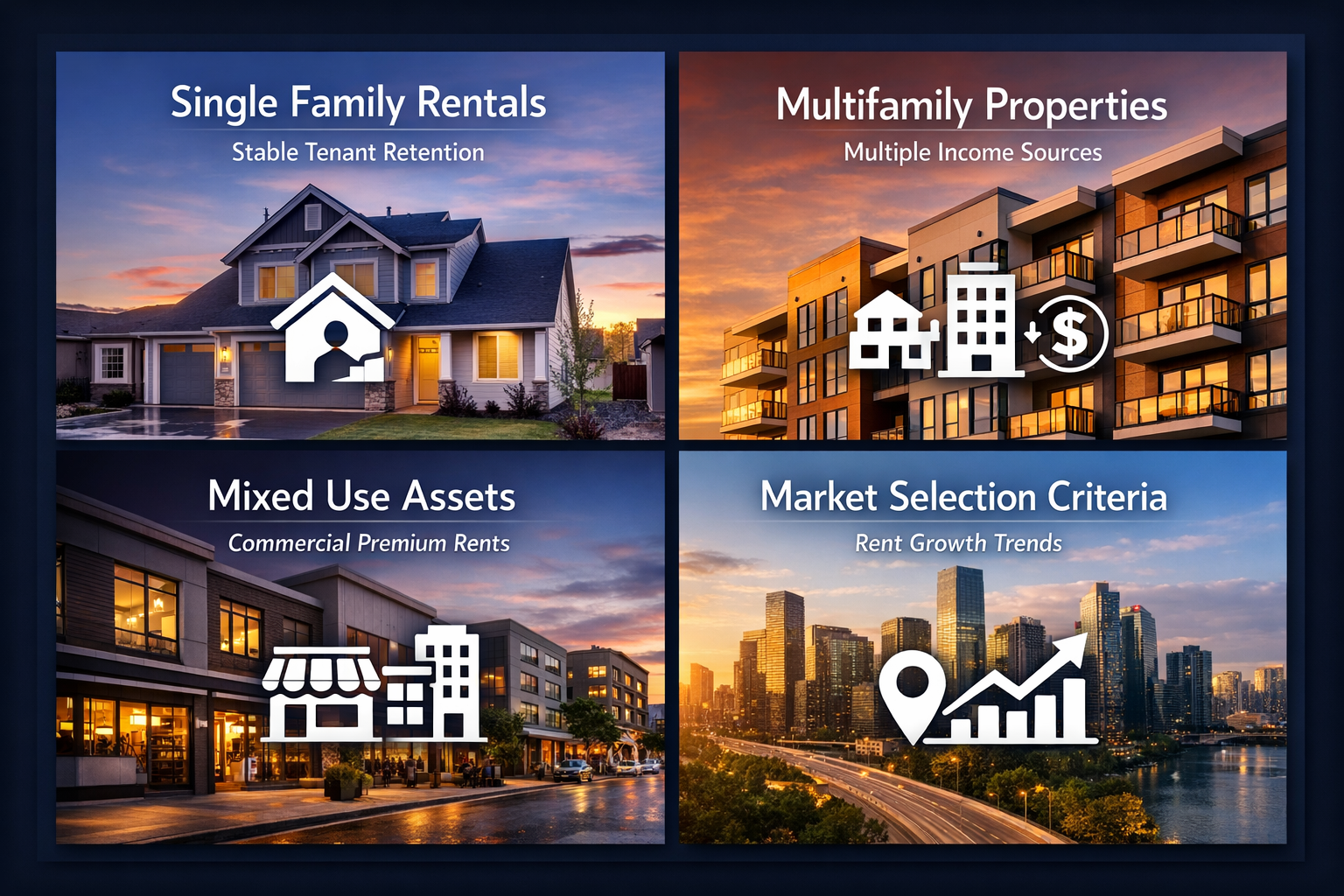
Single family rentals often represent the most straightforward path to DSCR loan approval, offering predictable income streams and broad market appeal. These properties typically attract stable, long-term tenants who view them as homes rather than temporary housing solutions.
The key to success with single family rentals lies in selecting properties in markets with strong rental demand and favorable price-to-rent ratios. Properties in established neighborhoods with good schools and amenities tend to command higher rents while attracting quality tenants who stay longer.
Multifamily properties offer compelling advantages for DSCR loans through diversified income streams and economies of scale. These assets can generate higher total rental income from a single property, potentially improving debt service coverage ratios significantly.
However, multifamily properties might require more active management and present higher upfront costs. Successful investors often focus on properties with 2-4 units initially, as these still qualify for residential lending terms while providing income diversification benefits.
Mixed use assets combine residential and commercial spaces, creating multiple revenue streams that can strengthen DSCR loan applications when properly managed. These properties offer unique advantages for investors seeking diversified cash flow sources.
The complexity of mixed use assets requires careful evaluation of both residential and commercial market conditions. Investors should understand local zoning regulations, tenant mix dynamics, and the unique challenges of managing different property types within a single asset.
Choosing the right market can significantly impact DSCR loan success regardless of property type. Current market analysis suggests focusing on areas with strong fundamentals that support consistent rental income growth and property value appreciation.
Top-performing markets in 2026 analysis indicate that investors should prioritize areas with balanced economic growth, reasonable property acquisition costs, and strong rental market fundamentals. These factors combine to create environments where DSCR loans can perform optimally across different property types.
Maximizing DSCR loan benefits requires aligning property selection with evolving financing products and market conditions. Recent innovations in DSCR lending have created new opportunities for property investors to optimize their financing approach.
The evolving nature of DSCR lending means investors should maintain flexibility in their property selection criteria while focusing on assets that demonstrate consistent income potential. Understanding how different lenders evaluate various property types can provide competitive advantages in securing favorable financing terms.
Selecting the best properties for DSCR loans requires balancing income potential, market fundamentals, and financing strategy. Single family rentals provide stability and predictability, while multifamily properties offer scaling opportunities and income diversification. Mixed use assets can deliver premium returns for investors comfortable with additional complexity.
Success ultimately depends on thorough market research, understanding local rental dynamics, and staying current with evolving DSCR lending products. By focusing on properties in strong rental markets with favorable price-to-rent ratios, investors can maximize their chances of DSCR loan approval while building portfolios that generate consistent cash flow and long-term appreciation.
The key is matching your investment strategy with property types that align with current market conditions and lender preferences, creating opportunities for sustainable growth in your real estate investment portfolio.
