Best Long Term Rental DSCR Strategies for Real Estate Investors
Real estate investors seeking sustainable returns understand that the best long term rental DSCR strategies combine smart financing with disciplined property management. In 2026, debt service coverage ratio loans have become increasingly sophisticated, requiring investors to align their buy and hold planning with evolving lender requirements.
Successfully implementing DSCR strategies involves more than just securing financing. It requires a comprehensive approach that encompasses location selection, stable cash flow management, and rigorous tenant screening processes. The changing landscape of DSCR loan requirements has created new opportunities for investors who understand how to optimize their portfolio performance while maintaining strong debt service coverage ratios.
This guide explores the essential strategies that separate successful long-term rental investors from those who struggle to maintain profitable operations. By focusing on proven techniques for maximizing cash flow and minimizing risk, investors can build portfolios that thrive in today's competitive market environment.
Essential DSCR Strategy Do's for Long-Term Success
Essential DSCR strategy do's for long-term success focus on building a foundation that supports sustainable growth and profitability. These proven practices help investors optimize their debt service coverage while maintaining strong rental income streams.
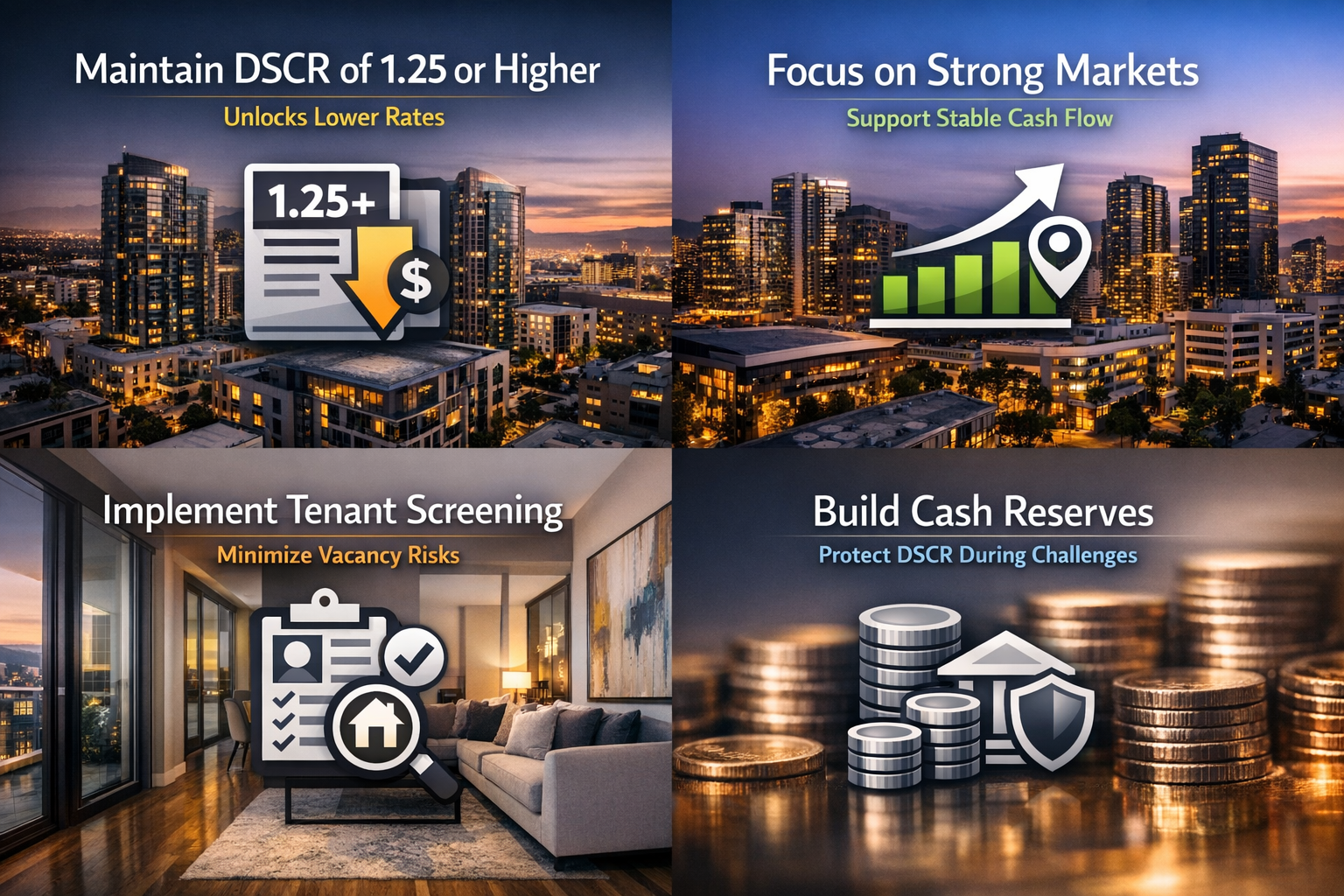
Maintain a DSCR of 1.25 or higher: This ratio typically unlocks lower interest rates and better leverage opportunities, which can significantly improve your long-term investment returns and financing flexibility.
Focus on markets with strong fundamentals: Choose locations that demonstrate consistent job growth, population increases, and diverse economic bases to support stable cash flow demand over time.
Implement comprehensive tenant screening: Establish rigorous screening criteria that evaluate credit scores, income verification, rental history, and employment stability to minimize vacancy risks and payment issues.
Build cash reserves for contingencies: Maintain adequate reserves for maintenance, vacancies, and unexpected expenses to protect your DSCR during challenging periods and avoid cash flow disruptions.
Critical DSCR Strategy Don'ts That Undermine Performance
Critical DSCR strategy don'ts that undermine performance represent common mistakes that can jeopardize your investment success. Avoiding these pitfalls helps protect your portfolio's financial stability and long-term growth potential.
Don't ignore market research and fundamentals: Purchasing properties in declining markets or areas with weak economic indicators may lead to sustained vacancy issues and deteriorating cash flow performance.
Don't overlook proper documentation requirements: Failing to maintain organized financial records and property documentation can complicate loan applications and renewals, potentially affecting your financing terms.
Don't rely on projected rents without verification: Using unrealistic rental projections can create DSCR calculations that don't reflect actual market conditions, leading to cash flow shortfalls and financing challenges.
Don't neglect ongoing property maintenance: Deferring maintenance and capital improvements can reduce property values, increase vacancy rates, and negatively impact your ability to maintain stable rental income.
Proven Buy and Hold Planning Techniques
Proven buy and hold planning techniques form the backbone of successful long-term rental strategies. These systematic approaches help investors structure their portfolios for sustained growth while maintaining healthy DSCR ratios.
Analyze cash-on-cash returns systematically: Calculate realistic returns based on actual rental income, operating expenses, and debt service to ensure each property contributes positively to your overall portfolio performance.
Develop a standardized property evaluation process: Create consistent criteria for assessing potential acquisitions, including location factors, property condition, rental potential, and alignment with DSCR loan requirements.
Establish clear acquisition and disposition timelines: Plan your investment timeline to optimize tax benefits, refinancing opportunities, and portfolio growth while maintaining adequate liquidity for new opportunities.
Create scalable management systems: Implement processes and systems that can handle portfolio growth efficiently, from tenant management to maintenance coordination and financial tracking.
Monitor market cycles and adjustment opportunities: Stay informed about local market trends and economic indicators that might affect rental demand, property values, and refinancing opportunities.
Stable Cash Flow Optimization Methods
Stable cash flow optimization methods ensure your rental properties generate consistent income that supports strong DSCR performance. These techniques help minimize income volatility while maximizing profitability over time.
Implement strategic rent increases: Schedule regular market-based rent adjustments that align with local market conditions and lease renewal periods to maintain competitive income levels without causing excessive tenant turnover.
Diversify your tenant base and property types: Spread risk across different property types and tenant demographics to reduce the impact of any single vacancy or market segment downturn on your overall cash flow.
Optimize operating expense management: Review and negotiate service contracts, insurance policies, and maintenance agreements regularly to control costs without compromising property quality or tenant satisfaction.
Maintain strategic vacancy reserves: Budget for typical vacancy periods and seasonal fluctuations to ensure your DSCR remains stable even during temporary income disruptions or tenant transitions.
Advanced Tenant Screening Protocols
Advanced tenant screening protocols protect your investment by ensuring reliable rental income that supports your DSCR requirements. These comprehensive evaluation methods help identify tenants who will contribute to long-term cash flow stability.
Establish income verification standards: Require documented proof of income that demonstrates the tenant's ability to afford rent comfortably, typically requiring monthly income of at least three times the rental amount.
Conduct thorough credit and background checks: Evaluate credit scores, payment history, and background information to assess financial responsibility and identify potential risks that could affect payment reliability.
Verify employment stability and references: Contact current employers and previous landlords to confirm employment status, rental history, and tenant behavior patterns that indicate long-term reliability.
Review debt-to-income ratios carefully: Analyze the applicant's total debt obligations to ensure rent payments won't create financial strain that could lead to late payments or early lease termination.
The best long term rental DSCR strategies combine disciplined financial planning with systematic property management approaches. Success requires maintaining strong debt service coverage ratios while implementing proven buy and hold planning techniques that support sustainable growth.
Achieving stable cash flow depends on careful market selection, comprehensive tenant screening, and ongoing operational optimization. Investors who focus on these fundamental strategies typically build more resilient portfolios that can adapt to changing market conditions while maintaining healthy returns.
As DSCR loan requirements continue to evolve in 2026, investors who master these core strategies will be better positioned to take advantage of financing opportunities and market conditions. The combination of smart financing, strategic property selection, and disciplined management creates the foundation for long-term rental investment success.