Mortgage volatility creates both challenges and opportunities for real estate investors. While fluctuating rates might disrupt original investment plans, savvy investors who understand the best exit strategies during mortgage volatility can pivot quickly and maintain profitability. The key lies in recognizing when to hold, when to refinance, and when to adjust your timeline based on market conditions.
Recent market forecasts suggest potential rate improvements, with some analysts predicting mortgage rates could drop to approximately 5.75% by 2026. However, the path there remains uncertain, making flexible exit strategies essential for protecting your investment portfolio. Whether you're managing DSCR loans, fix and flip projects, or rental properties, having multiple exit options keeps you ahead of market shifts.
Strategic Do's for Volatile Markets
When navigating the best exit strategies during mortgage volatility, certain practices can significantly improve your outcomes. These proven approaches help investors maintain flexibility while positioning themselves for future opportunities.
Monitor rate lock opportunities closely - Lock in favorable rates when they appear, especially for properties nearing completion or stabilization. Rate locking strategies can provide crucial stability during unpredictable market periods.
Leverage updated DSCR loan requirements - Take advantage of relaxed seasoning requirements that allow delayed financing with no seasoning period. This flexibility enhances liquidity options and supports rapid portfolio expansion.
Prepare for refinance pivots - Position your properties for potential refinancing opportunities as rates potentially decline. Ensure your cash flow documentation stays current and properties maintain strong debt service coverage ratios.
Consider alternative asset backing - Explore innovative financing options that accept cryptocurrency reserves or other non-traditional assets, which can provide additional funding flexibility during volatile periods.
Critical Don'ts to Avoid
Avoiding common mistakes during volatile mortgage markets is equally important as implementing good strategies. These pitfalls can trap investors in unfavorable positions or cause them to miss valuable opportunities.
Don't rush forced sales - Avoid panic selling when rates spike temporarily. Market volatility often creates short-term pressure, but hasty decisions can result in significant losses, especially if stabilization timing improves within months.
Don't ignore market timing signals - Federal Reserve meetings and policy announcements provide valuable guidance. Disregarding these indicators can lead to poorly timed refinancing or acquisition decisions.
Don't over-leverage during uncertainty - While opportunities exist, excessive borrowing during volatile periods increases risk exposure. Maintain conservative debt ratios that allow for market fluctuations.
Don't neglect cash flow projections - Failing to model different rate scenarios can leave you unprepared for payment changes. Always stress-test your properties against various interest rate environments.
Essential Refinance Pivot Strategies
A successful refinance pivot requires careful planning and timing. These numbered steps help investors execute refinancing strategies that take advantage of improving market conditions.
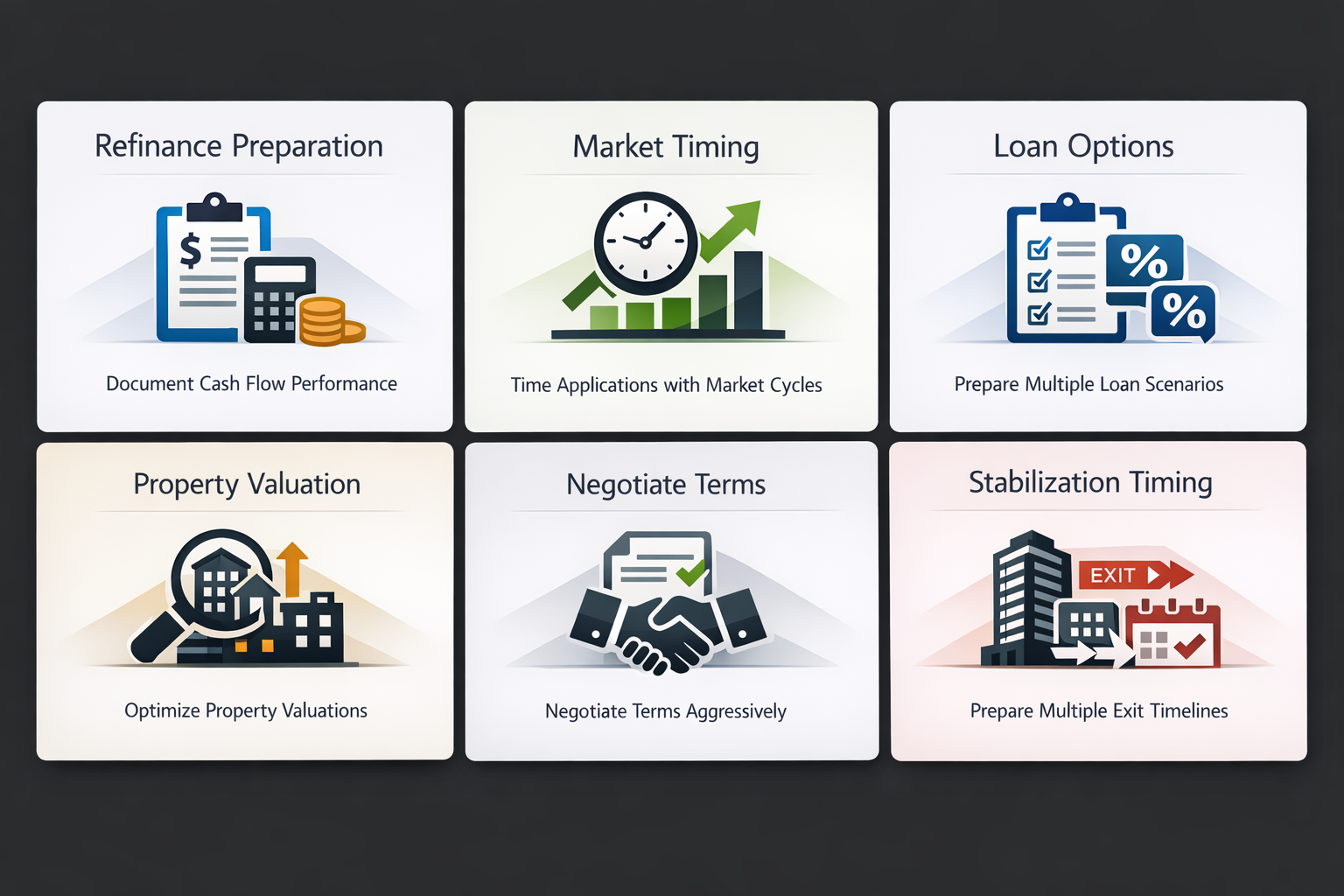
Document cash flow performance thoroughly - Maintain detailed rental income records and expense documentation. Strong DSCR ratios become even more critical during volatile periods when lenders tighten requirements.
Time applications with market cycles - Monitor Federal Reserve announcements and economic indicators to identify optimal refinancing windows. Rate improvements often follow predictable policy patterns.
Prepare multiple loan scenarios - Work with lenders who offer various loan products. Having options between traditional mortgages, DSCR loans, and alternative financing keeps you flexible as conditions change.
Optimize property valuations - Ensure properties are well-maintained and properly valued before refinancing. Market volatility can affect appraisals, so presenting properties in their best condition matters more during uncertain times.
Negotiate terms aggressively - Volatile markets create opportunities for better loan terms as lenders compete for quality borrowers. Don't accept the first offer without exploring alternatives.
Proven Hold Strategy Implementations
Hold strategies become particularly valuable during mortgage volatility when selling might not be optimal. These approaches help investors maintain properties profitably while waiting for better market conditions.
Enhance rental income streams - Focus on improving cash flow through strategic rent increases, additional services, or property improvements. Strong rental performance supports better refinancing terms when rates improve.
Build substantial cash reserves - Maintain 6-12 months of expenses in reserve funds. Volatile markets can create unexpected challenges, and adequate reserves provide the flexibility to hold through difficult periods.
Optimize tenant quality and retention - Invest in tenant screening and retention programs. Stable occupancy becomes more valuable during uncertain economic periods and supports consistent cash flow for loan servicing.
Implement value-add improvements strategically - Target renovations that increase both rental income and property value. Smart improvements can improve your position for future refinancing or sale when markets stabilize.
Monitor comparable sales and rental data - Track local market performance to identify the optimal exit timing. Understanding when your market reaches peak performance helps maximize returns from hold strategies.
Optimizing Stabilization Timing
Stabilization timing can make the difference between a profitable investment and a problematic hold. These strategies help investors identify and execute optimal timing decisions during volatile markets.
Track leading market indicators - Monitor employment data, new construction permits, and local economic developments. These factors often predict market direction 3-6 months ahead, helping you time stabilization decisions.
Coordinate with seasonal patterns - Align stabilization and exit strategies with seasonal real estate cycles. Spring and summer typically offer better selling conditions, while fall might favor rental market optimization.
Leverage rate forecast windows - Use professional rate forecasts to time major decisions. If rates are expected to drop significantly, extending hold periods might be worthwhile to capture better refinancing terms.
Balance carrying costs with opportunity costs - Calculate the true cost of holding versus selling in current conditions. Sometimes accepting modest returns beats the carrying costs of extended holds during volatile periods.
Prepare multiple exit timelines - Develop 6-month, 12-month, and 24-month exit scenarios. Having predetermined trigger points helps you execute decisions quickly when market conditions change.
The best exit strategies during mortgage volatility combine flexibility, preparation, and market awareness. Successful real estate investors understand that volatile markets require multiple contingency plans rather than rigid adherence to original strategies. Whether you choose a refinance pivot, implement a strategic hold strategy, or optimize your stabilization timing, the key is maintaining options while market conditions evolve.
Current market indicators suggest potential opportunities ahead, with possible rate improvements by 2026 and enhanced financing flexibility through updated DSCR loan requirements. However, the path forward remains uncertain, making adaptable exit strategies more valuable than ever. By following proven do's and don'ts, preparing for various scenarios, and timing decisions carefully, investors can navigate mortgage volatility successfully while positioning themselves for future growth.
Remember that every property and market situation is unique. The strategies that work best for your portfolio depend on your specific circumstances, risk tolerance, and local market conditions. Stay informed, remain flexible, and always have multiple exit options ready to execute when the right opportunity presents itself.