Real estate investors are constantly seeking ways to optimize their financing structures and accelerate portfolio growth. The best DSCR refinancing strategies can transform how you manage cash flow, extract equity, and scale your investment operations. Unlike traditional mortgage refinancing focused on personal income verification, DSCR refinancing centers on property performance and cash flow generation.
Today's evolving lending landscape presents unique opportunities for savvy investors. With DSCR products undergoing significant innovation and hybrid financing structures emerging, understanding strategic refinancing approaches has become more critical than ever. These strategies might help you reduce financing costs, improve debt structures, and position your portfolio for sustainable growth.
The following comprehensive guide explores proven refinancing tactics that successful investors use to maximize returns and build wealth through strategic debt management.
Common DSCR Refinancing Questions Answered
Many investors have similar concerns when considering DSCR refinancing strategies. Understanding these fundamentals can help clarify whether refinancing aligns with your investment goals.
Q: When should I consider refinancing my investment property with a DSCR loan?
DSCR refinancing typically makes sense when you can improve your debt service coverage ratio, reduce interest costs, or extract equity for additional investments. Properties that have undergone renovations or experienced rent increases often benefit from refinancing, as improved cash flows may qualify for better loan terms.
Q: How does the bridge-to-DSCR strategy work for portfolio expansion?
This approach involves using short-term bridge financing for property acquisition and renovation, then refinancing into a DSCR loan once the property is stabilized with tenants. This strategy might allow investors to secure better long-term rates while improving cash flow through property improvements before permanent financing.
Strategic Cash Flow Optimization Through Refinancing
Cash flow optimization represents the cornerstone of successful DSCR refinancing strategies. By restructuring debt to align with property performance, investors can typically enhance their monthly cash position and improve overall portfolio returns.
Interest-only payment structures: These arrangements may help manage debt payments during rate fluctuations, providing flexibility in cash flow management while maintaining investment viability
Term extension benefits: Longer loan terms could reduce monthly payments, freeing up capital for additional investments or property improvements
Rate reduction opportunities: Properties with improved DSCR ratios often qualify for better interest rates, directly impacting monthly cash flow and long-term profitability
Debt consolidation advantages: Combining multiple property loans into streamlined DSCR financing might simplify management while potentially improving overall terms
Equity Recycling Techniques for Portfolio Growth
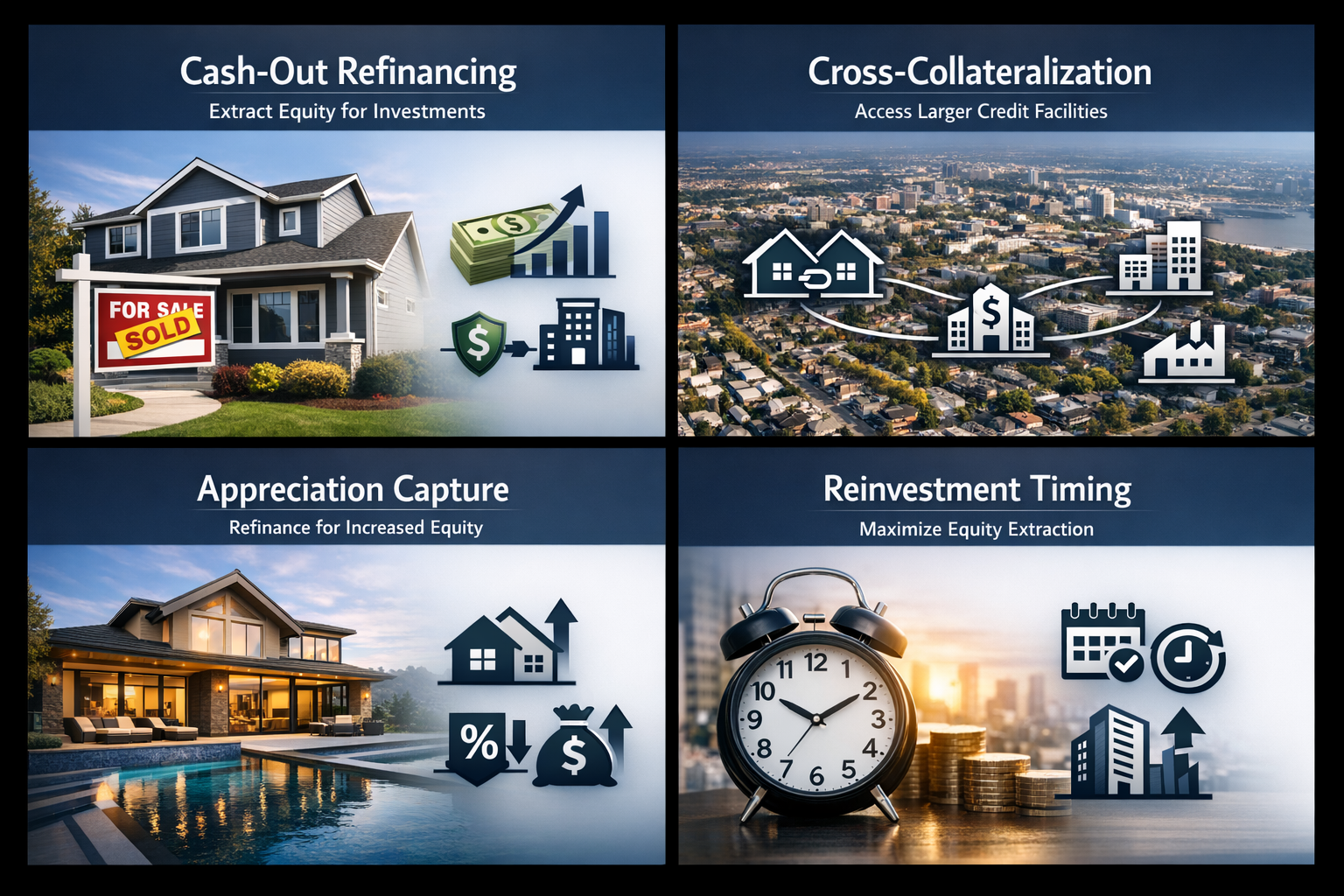
Equity recycling through DSCR refinancing allows investors to extract accumulated property value and redeploy capital into new opportunities. This strategy can accelerate portfolio growth while maintaining ownership of appreciating assets.
Cash-out refinancing applications: Extract equity from performing properties to fund down payments on additional investments, leveraging existing success to fuel growth
Cross-collateralization benefits: Use multiple properties as collateral to access larger credit facilities and better terms for portfolio-wide financing solutions
Appreciation capture strategies: Refinance properties that have experienced significant appreciation to access increased equity without selling valuable assets
Reinvestment timing optimization: Strategic refinancing timing might maximize equity extraction when market conditions favor both refinancing rates and acquisition opportunities
Bridge-to-DSCR Implementation Strategies
The bridge-to-DSCR approach represents an increasingly popular strategy among experienced investors. This method involves using short-term financing for acquisition and renovation, followed by DSCR refinancing once properties are stabilized.
Acquisition phase planning: Secure bridge financing for quick property purchases, allowing competitive offers in fast-moving markets while planning long-term DSCR refinancing
Renovation coordination: Use bridge loan flexibility to complete property improvements that enhance cash flow and DSCR ratios before permanent financing
Tenant stabilization focus: Achieve full occupancy and market rents during the bridge period to demonstrate strong cash flows for DSCR loan qualification
Transition timing optimization: Plan refinancing transitions to coincide with favorable market conditions and completed property improvements for optimal terms
Rate Environment Navigation Tactics
Successfully navigating changing interest rate environments requires strategic timing and flexible financing approaches. Current market conditions may present both challenges and opportunities for DSCR refinancing.
Market timing considerations: Monitor rate trends and economic indicators to identify optimal refinancing windows that balance current rates with future projections
Lock strategy implementation: Evaluate rate lock options during application processes to protect against unfavorable rate movements while maintaining flexibility for better opportunities
Adjustable rate evaluation: Consider ARM products when fixed rates are elevated, potentially benefiting from future rate decreases while maintaining current cash flow
Portfolio-wide rate management: Stagger loan maturities across your portfolio to avoid refinancing all properties during unfavorable rate cycles
Prepayment penalty assessment: Analyze prepayment terms in current loans to determine optimal refinancing timing without excessive penalty costs
Advanced Cash Out Planning Methods
Sophisticated cash out planning through DSCR refinancing requires careful analysis of property performance, market conditions, and investment objectives. These methods can maximize capital efficiency while maintaining strong portfolio fundamentals.
Debt service coverage optimization: Target refinancing amounts that maintain strong DSCR ratios while maximizing cash extraction, typically keeping ratios above lender minimums with safety margins
Market cycle positioning: Time cash-out refinancing to coincide with peak property values and strong rental markets, maximizing available equity while ensuring sustainable cash flows
Tax efficiency coordination: Structure cash-out timing and amounts to optimize tax implications, potentially spreading gains across tax years or coordinating with other investment activities
Reinvestment opportunity alignment: Plan cash-out amounts based on specific acquisition opportunities, ensuring extracted capital matches investment requirements and market timing
The best DSCR refinancing strategies combine tactical execution with strategic vision, allowing real estate investors to optimize their portfolios while building sustainable wealth. From bridge-to-DSCR transitions that enhance property performance to sophisticated equity recycling techniques, these approaches can transform how you manage investment financing.
Success in DSCR refinancing requires understanding both current market conditions and long-term investment objectives. The evolving lending landscape continues to present new opportunities for creative financing solutions, making it essential to stay informed about product innovations and market trends.
As you evaluate refinancing opportunities, consider how each strategy aligns with your portfolio goals and risk tolerance. The right combination of cash flow optimization, equity recycling, and strategic timing might significantly accelerate your path to investment success. Remember that effective refinancing isn't just about securing better rates, it's about creating financial flexibility that supports sustainable portfolio growth over time.