The short-term rental market continues to present lucrative opportunities for real estate investors, but securing the right financing can make or break your investment strategy. DSCR loans have emerged as a preferred financing solution for Airbnb properties, offering unique advantages that traditional mortgages simply can't match. Finding the best DSCR options for Airbnb investments requires understanding how lenders evaluate rental income, qualification criteria, and the specific challenges of income volatility in short-term rentals.
Unlike conventional mortgages that rely heavily on personal income verification, DSCR loans focus primarily on the property's ability to generate sufficient cash flow to cover debt obligations. This approach aligns perfectly with Airbnb investments, where property performance often matters more than the borrower's W-2 income. However, navigating the landscape of DSCR lenders and loan products requires careful consideration of terms, requirements, and how each option addresses the unique characteristics of short-term rental properties.
Key DSCR Qualification Requirements for Short-Term Rentals
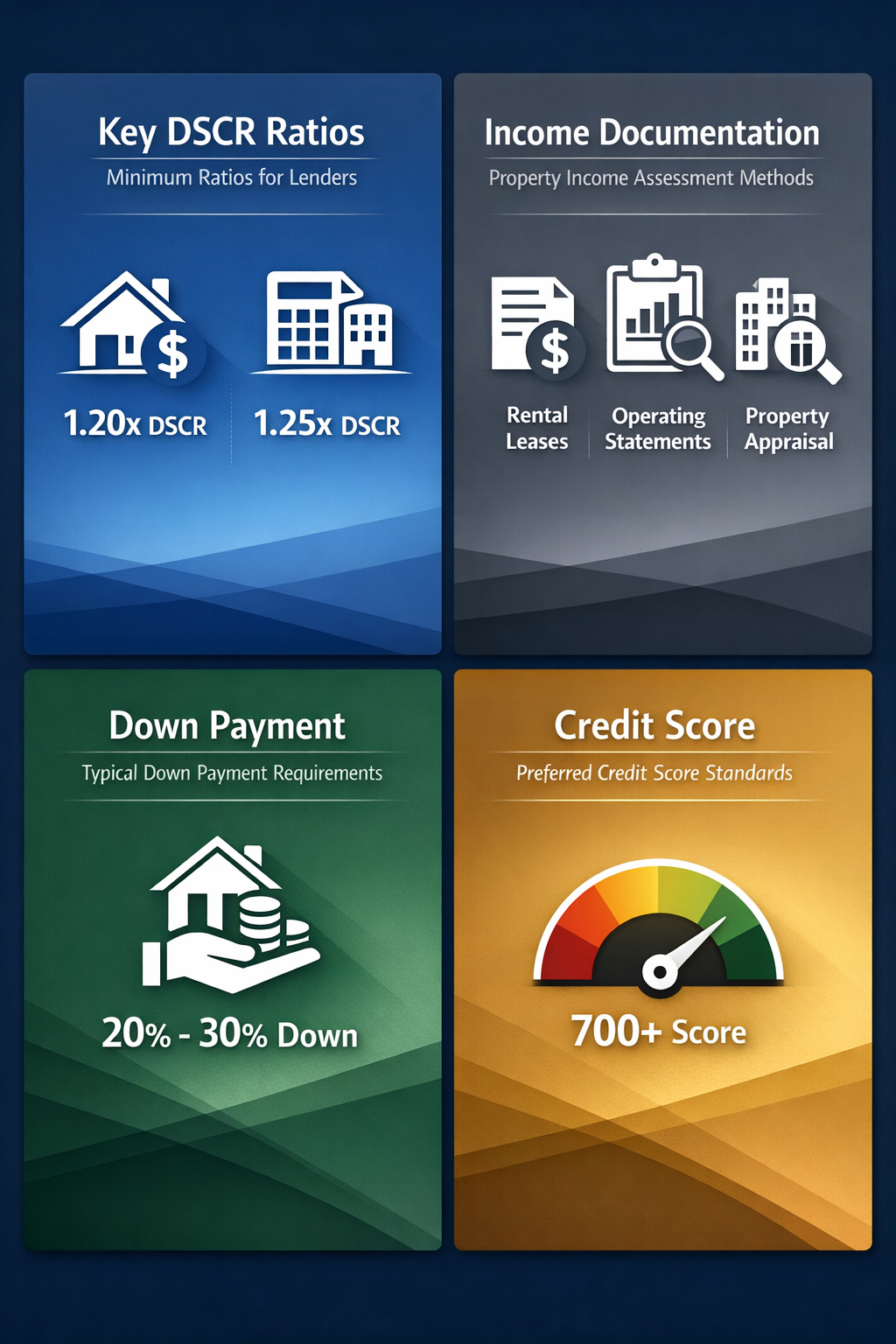
Understanding the key DSCR qualification requirements for short-term rentals forms the foundation of securing optimal financing for your Airbnb investment. Lenders typically require a minimum DSCR of at least 1.0, though many prefer ratios between 1.2 and 1.3 for Airbnb properties due to the inherent income volatility associated with short term rental rules.
Minimum DSCR Ratios: Most lenders require a DSCR of 1.0 or higher, with many preferring 1.2-1.3 for Airbnb properties to account for seasonal fluctuations and occupancy variations that can impact rental income consistency.
Property Income Documentation: Lenders typically analyze rental income through market rent assessments, comparable property analysis, or existing rental history, focusing on the property's earning potential rather than personal income verification.
Down Payment Requirements: DSCR loans for short-term rentals often require higher down payments compared to traditional mortgages, typically ranging from 20% to 25% depending on the lender and property type.
Credit Score Standards: While DSCR loans may be more flexible than conventional financing, most lenders still maintain credit score requirements, often preferring scores above 620 for competitive rates and terms.
Top DSCR Loan Features That Benefit Airbnb Investors
The top DSCR loan features that benefit Airbnb investors address the unique challenges and opportunities present in short-term rental investments. These specialized loan products offer flexibility and terms specifically designed to accommodate the operational realities of vacation rental properties.
No Personal Income Verification:DSCR financing options for Airbnb eliminate the need for extensive personal income documentation, allowing investors to qualify based solely on the property's income-generating potential rather than employment history or tax returns.
Faster Closing Times: With simplified underwriting focused on property cash flow rather than personal financial complexity, DSCR loans often close more quickly than traditional mortgages, enabling investors to capitalize on time-sensitive opportunities.
Portfolio Scaling Advantages: These loans don't count against conventional loan limits, allowing investors to build larger portfolios without the restrictions typically imposed by government-sponsored enterprise loan caps.
Flexible Property Types: DSCR lenders often accept various property types suitable for short-term rentals, including single-family homes, condominiums, and multi-unit properties in vacation destinations.
Managing Income Volatility in DSCR Applications
Managing income volatility in DSCR applications represents one of the most critical aspects of securing financing for Airbnb properties. Short-term rental income can fluctuate significantly based on seasonal demand, local events, and market conditions, making accurate income analysis strategies essential for both lenders and borrowers.
Seasonal Income Patterns: Lenders may analyze rental income over multiple seasons to understand peak and off-peak earning potential, often requiring conservative estimates that account for seasonal variations in occupancy and rates.
Market Rent Analysis: Professional appraisers or rent analysis services might evaluate comparable short-term rental properties in the area to establish realistic income projections that account for local market dynamics and competition.
Occupancy Rate Considerations: DSCR calculations for Airbnb properties typically incorporate conservative occupancy assumptions, often ranging from 60% to 75% annual occupancy depending on market conditions and property location.
Operating Expense Buffers: Lenders may require higher expense ratios for short-term rentals to account for increased maintenance, cleaning, utilities, and management costs associated with frequent guest turnover.
Step-by-Step DSCR Application Process for Airbnb Properties
The step-by-step DSCR application process for Airbnb properties differs significantly from traditional mortgage applications, focusing primarily on property analysis and income potential rather than extensive personal financial documentation.
Property Identification and Analysis: Begin by identifying suitable properties and conducting thorough market analysis to determine realistic rental income projections, including seasonal variations and competitive positioning within the local short-term rental market.
Lender Qualification and Comparison: Research and compare DSCR lenders who specialize in short-term rental financing, evaluating their specific requirements, interest rates, and loan terms to identify the best fit for your investment strategy.
Income Documentation Preparation: Compile relevant income documentation, which may include market rent studies, comparable property analysis, or existing rental history if the property is already generating short-term rental income.
Application Submission and Underwriting: Submit the complete application package and work closely with the lender during underwriting, providing additional documentation as requested and responding promptly to any questions about the property's income potential.
Closing Preparation and Finalization: Coordinate with all parties involved in the closing process, ensuring all conditions are met and preparing for a smooth transition to property ownership and short-term rental operations.
Optimizing DSCR Calculations for Maximum Approval Chances
Optimizing DSCR calculations for maximum approval chances requires a strategic approach to presenting your property's income potential in the most favorable light while maintaining realistic and defensible projections that lenders will accept.
Conservative Income Projections: Present realistic income estimates based on thorough market research and comparable property analysis, avoiding overly optimistic projections that may raise red flags during underwriting review.
Detailed Expense Analysis: Provide comprehensive operating expense calculations that include all costs associated with short-term rental operations, such as cleaning, maintenance, utilities, insurance, and management fees to demonstrate thorough financial planning.
Market Documentation Support: Supplement income projections with solid market data, including local tourism statistics, seasonal demand patterns, and comparable property performance to validate your rental income assumptions.
Professional Property Valuation: Obtain professional appraisals that include rental income analysis and market comparisons to support both the property value and income projections used in DSCR calculations.
Contingency Planning Presentation: Demonstrate awareness of potential income fluctuations and present contingency plans or backup strategies that show lenders you've considered various scenarios and can maintain debt service even during challenging periods.
Selecting the best DSCR options for Airbnb properties requires careful evaluation of lender requirements, loan terms, and how well each option addresses the unique characteristics of short-term rental investments. The key lies in understanding that DSCR loans offer significant advantages for vacation rental investors, particularly in their focus on property income rather than personal financial metrics.
Success with DSCR financing often depends on presenting realistic income projections, understanding occupancy analysis requirements, and working with lenders who specialize in short-term rental financing. While income volatility presents challenges, proper preparation and conservative financial planning can help investors navigate the approval process successfully.
As the short-term rental market continues to evolve, DSCR loans remain a powerful tool for building and scaling Airbnb portfolios. By focusing on properties with strong income potential and working with experienced lenders who understand the vacation rental market, investors can leverage these financing options to maximize their real estate investment returns while building sustainable rental income streams.