Finding the best DSCR markets for investors requires more than just looking at property prices. Smart investors need markets where debt service coverage ratio loans align with strong rental demand, steady cash flow potential, and favorable investment fundamentals. With DSCR loan demand surging and mortgage rates stabilizing, 2026 presents unique opportunities for investors who know where to look.
The convergence of accessible DSCR financing and emerging cash flow markets creates a perfect storm for portfolio expansion. From Sun Belt cities experiencing multifamily growth to affordable Midwest markets offering reliable returns, investors have multiple pathways to success. However, not all markets are created equal when it comes to maximizing your DSCR loan investment.
Essential Market Characteristics for DSCR Success
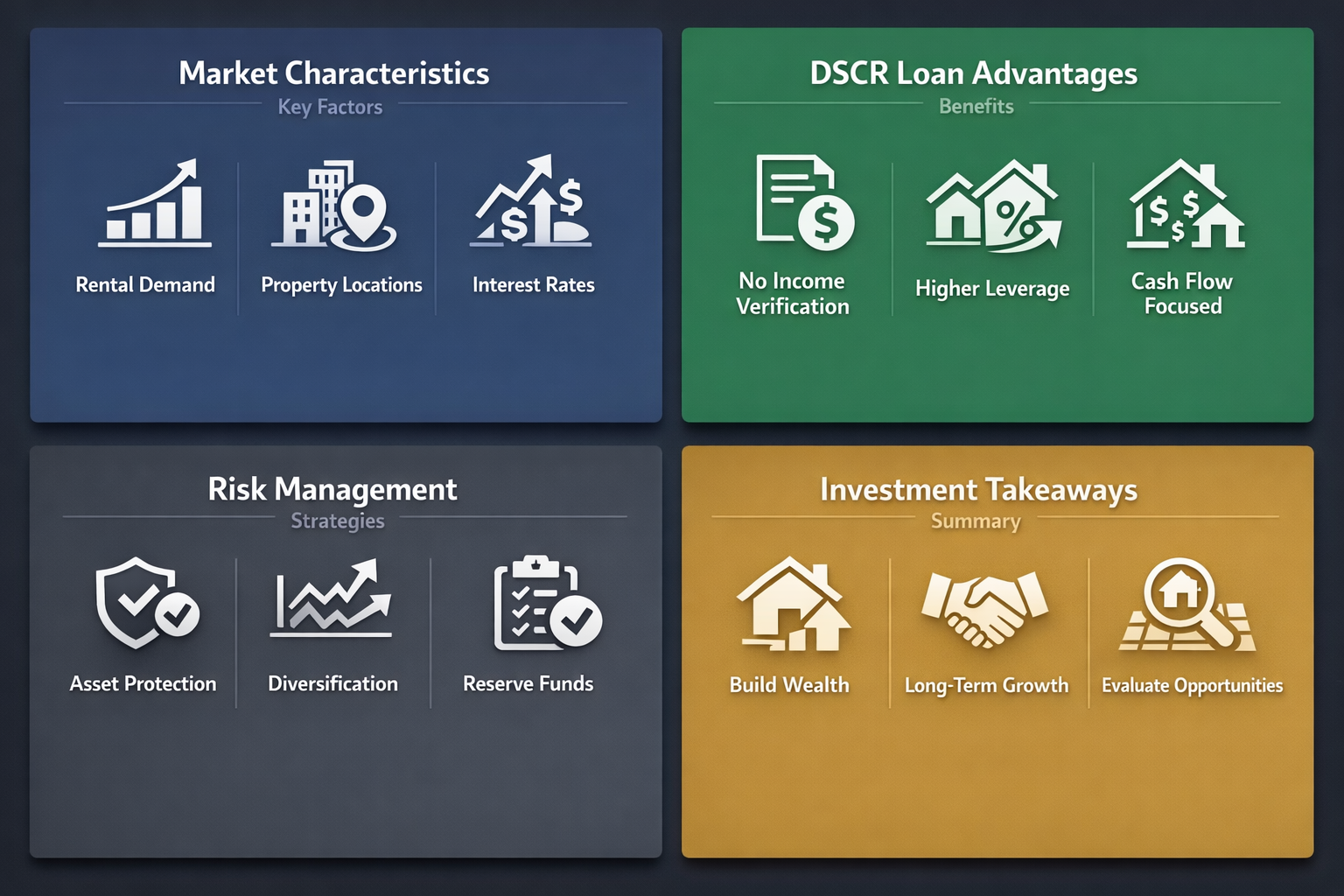
Essential market characteristics for DSCR success form the foundation of profitable real estate investors. When evaluating potential markets, certain factors consistently indicate whether a location will support strong debt service coverage ratios and sustainable cash flow.
Strong rental demand fundamentals: Markets with growing employment bases, population influx, and limited housing supply typically maintain consistent occupancy rates and rent growth potential.
Favorable cap rates and rent-to-price ratios: Areas where property acquisition costs align with rental income expectations allow for better debt service coverage from day one.
Supportive local regulations: Markets with landlord-friendly policies and reasonable rental regulations reduce operational risks and protect cash flow stability.
Economic diversification: Cities with multiple industry sectors provide stability against economic downturns that could impact rental demand and property values.
Top Sun Belt Markets for Multifamily DSCR Investments
Top Sun Belt markets for multifamily DSCR investments have emerged as particularly attractive destinations for investors seeking growth and stability. These regions typically combine population growth with business-friendly environments that support rental demand.
Raleigh Durham area: This market offers robust job growth in technology and healthcare sectors, supporting steady rental demand and appreciation potential for multifamily properties.
Austin region: Despite recent market adjustments, Austin continues to attract businesses and residents, creating ongoing opportunities for investors with proper market timing.
Tampa Bay market: Florida's tax advantages and population growth trends make Tampa an appealing option for multifamily investments, particularly for out-of-state investors.
Other emerging Sun Belt cities: Markets throughout the South and Southwest may offer similar fundamentals with less competition and better entry pricing.
Midwest and Southeast Cash Flow Opportunities
Midwest and Southeast cash flow opportunities present compelling alternatives for investors prioritizing immediate returns over rapid appreciation. These markets often provide the stable, predictable income streams that make DSCR loans particularly effective.
Affordable entry points: Lower acquisition costs in these regions typically mean better debt service coverage ratios and faster path to positive cash flow.
Established rental markets: Many Midwest and Southeast cities have mature rental markets with predictable demand patterns and stable tenant bases.
Lower competition: Less investor activity in these markets may translate to better deal availability and more negotiating power with sellers.
Strong fundamentals: Despite lower price points, many of these markets maintain solid employment bases and population stability that support long-term rental demand.
Market Analysis Framework for DSCR Investors
Market analysis framework for DSCR investors should follow a systematic approach that evaluates both current conditions and future potential. This structured evaluation helps ensure investment decisions align with DSCR loan requirements and cash flow objectives.
Review employment and population trends: Analyze job growth statistics, major employer stability, and demographic shifts that indicate rental demand sustainability over your investment timeline.
Calculate key investment metrics: Examine average cap rates, rent-to-price ratios, and typical debt service coverage ratios achievable in your target market segments.
Assess local market dynamics: Research inventory levels, development pipeline, and absorption rates that could impact future supply and demand balance.
Evaluate financing conditions: Understand how local lenders view the market and what DSCR loan terms are typically available for your investment strategy.
DSCR Loan Advantages in Emerging Markets
DSCR loan financing advantages in emerging markets become particularly pronounced when investors can secure favorable financing terms while entering growth markets early. The flexibility of debt service coverage ratio loans aligns well with the dynamics of developing real estate markets.
Income-based qualification: DSCR loans focus on property cash flow rather than personal income, making it easier to finance in markets where property fundamentals are strong but personal income documentation may be complex.
Portfolio expansion capabilities: Investors can leverage DSCR financing to acquire multiple properties in promising markets without hitting conventional loan limits that restrict portfolio growth.
Flexible terms for investment properties: DSCR loan products often accommodate the unique needs of rental property investors, including cash-out refinancing options that can fund additional acquisitions.
Speed and efficiency: Faster approval processes typical with DSCR loans allow investors to act quickly when opportunities arise in competitive emerging markets.
Risk Management in DSCR Market Selection
Risk management in DSCR market selection requires careful consideration of factors that could impact long-term cash flow and debt service coverage. Smart investors balance growth potential with stability to protect their investment returns.
Diversification across market types: Spread investments across different geographic regions and market characteristics to reduce exposure to local economic downturns or market-specific challenges.
Conservative debt service coverage assumptions: Use realistic rental income projections and factor in vacancy rates, maintenance costs, and potential rent fluctuations when calculating debt service coverage.
Monitor market saturation levels: Track new construction, investor activity, and rental supply growth that could impact future occupancy rates and rent growth potential.
Plan for market cycle fluctuations: Consider how your target markets have performed during previous economic cycles and ensure your investment strategy can weather temporary downturns.
Strategic Investment Takeaways
Strategic investment takeaways for DSCR market selection center on aligning financing advantages with market fundamentals to create sustainable cash flow streams. The best DSCR markets for investors typically combine accessible financing with solid rental demand drivers, whether that's through emerging Sun Belt growth or established Midwest stability. Success often comes from thorough market research, conservative underwriting, and strategic timing that takes advantage of both favorable DSCR loan terms and local market conditions. Investors who focus on markets where property fundamentals support strong debt service coverage ratios while maintaining growth potential position themselves for long-term success in an evolving real estate landscape.
The landscape of DSCR investing continues to evolve as markets shift and financing becomes more accessible. By focusing on regions where debt service coverage fundamentals align with growth potential, investors can build portfolios that generate consistent returns while taking advantage of favorable loan terms. Whether targeting Sun Belt growth markets or stable Midwest opportunities, success comes from matching market characteristics with investment objectives.
As DSCR loan demand continues into 2026, investors who understand how to evaluate markets through the lens of debt service coverage will find the most profitable opportunities. The key lies in balancing immediate cash flow needs with long-term appreciation potential, always ensuring that market fundamentals support sustainable rental income streams that exceed debt service requirements.