Finding the best DSCR markets for cash flow has become increasingly critical as real estate investors navigate the evolving landscape of 2026. With DSCR lending products adapting to tighter credit standards and new hybrid structures emerging, investors need strategic market selection more than ever. The key lies in identifying rental demand areas where cash flow remains strong despite economic pressures, while leveraging the expanding DSCR investor pools that are creating new financing opportunities across high yield cities nationwide.
Market fundamentals driving DSCR cash flow success center around specific economic indicators that directly impact rental property performance. The most profitable investor hotspots typically share certain characteristics that make them ideal for DSCR financing strategies.
Population Growth Trends: Cities experiencing steady population increases create sustained rental demand, supporting consistent cash flow and higher DSCR ratios that meet lender requirements.
Employment Diversification: Markets with diverse job sectors tend to weather economic downturns better, protecting rental income streams that DSCR loans depend on for qualification.
Rent-to-Purchase Price Ratios: Areas where rental rates remain strong relative to property acquisition costs offer better debt service coverage, making DSCR financing more accessible.
Inventory Constraints: Limited housing supply in high-demand areas typically supports both rental rates and property appreciation, enhancing overall investment returns.
High Yield Cities With Strong Rental Demand
High yield cities with strong rental demand are emerging as the cornerstone of successful DSCR investment strategies. These markets demonstrate the resilience needed to maintain positive cash flow even as lending standards evolve.
Southeastern Growth Markets: Cities in Florida, Texas, and the Carolinas continue attracting both residents and investors, with rental demand often outpacing new construction schedules.
Midwest Value Plays: Select markets in Ohio, Indiana, and Missouri offer attractive purchase prices combined with solid rental yields, creating favorable DSCR scenarios for investors.
Mountain West Expansion Areas: Growing cities in Colorado, Utah, and Idaho blend population growth with limited inventory, supporting strong rental markets ideal for DSCR financing.
Tech Hub Satellites: Secondary cities near major technology centers often provide better cash flow metrics while benefiting from economic spillover effects.
DSCR Ratio Performance Across Different Markets
DSCR ratio performance across different markets varies significantly based on local economic conditions and rental market dynamics. Understanding these variations helps investors target the most suitable locations for their financing strategies.
Primary Market Challenges: Major metropolitan areas may offer high rents but often require larger down payments and face more competition, potentially limiting DSCR performance despite strong rental demand.
Secondary Market Opportunities: Mid-sized cities frequently provide the sweet spot for DSCR investors, balancing reasonable acquisition costs with sufficient rental demand to support healthy debt service coverage.
Emerging Market Potential: Up-and-coming areas might offer the best long-term DSCR prospects, though they require careful analysis of growth sustainability and rental market maturity.
Rural Market Limitations: While property costs may be lower in rural areas, limited rental demand can make achieving acceptable DSCR ratios more challenging for most investors.
Regional Investment Strategies for Maximum Returns
Regional investment strategies for maximum returns require understanding how different geographic areas respond to DSCR financing opportunities. Each region presents unique advantages and challenges that smart investors can leverage.
Sunbelt Advantages: Southern and southwestern states often combine favorable landlord laws, growing populations, and reasonable property taxes, creating ideal conditions for DSCR-financed investments.
Rust Belt Revival: Some Midwest markets offer exceptional value propositions with low entry costs and surprisingly strong rental yields, though market selection requires careful due diligence.
Coastal Market Considerations: While expensive, certain coastal markets may justify higher acquisition costs through superior rent growth potential and market stability over economic cycles.
Border State Dynamics: Markets near state borders can offer strategic advantages, allowing investors to benefit from favorable regulations while accessing broader economic regions.
Essential Market Analysis Steps for DSCR Success
Essential market analysis steps for DSCR success involve a systematic approach to evaluating potential investment locations. With expanded DSCR investor pools creating more opportunities, thorough market research becomes even more critical.
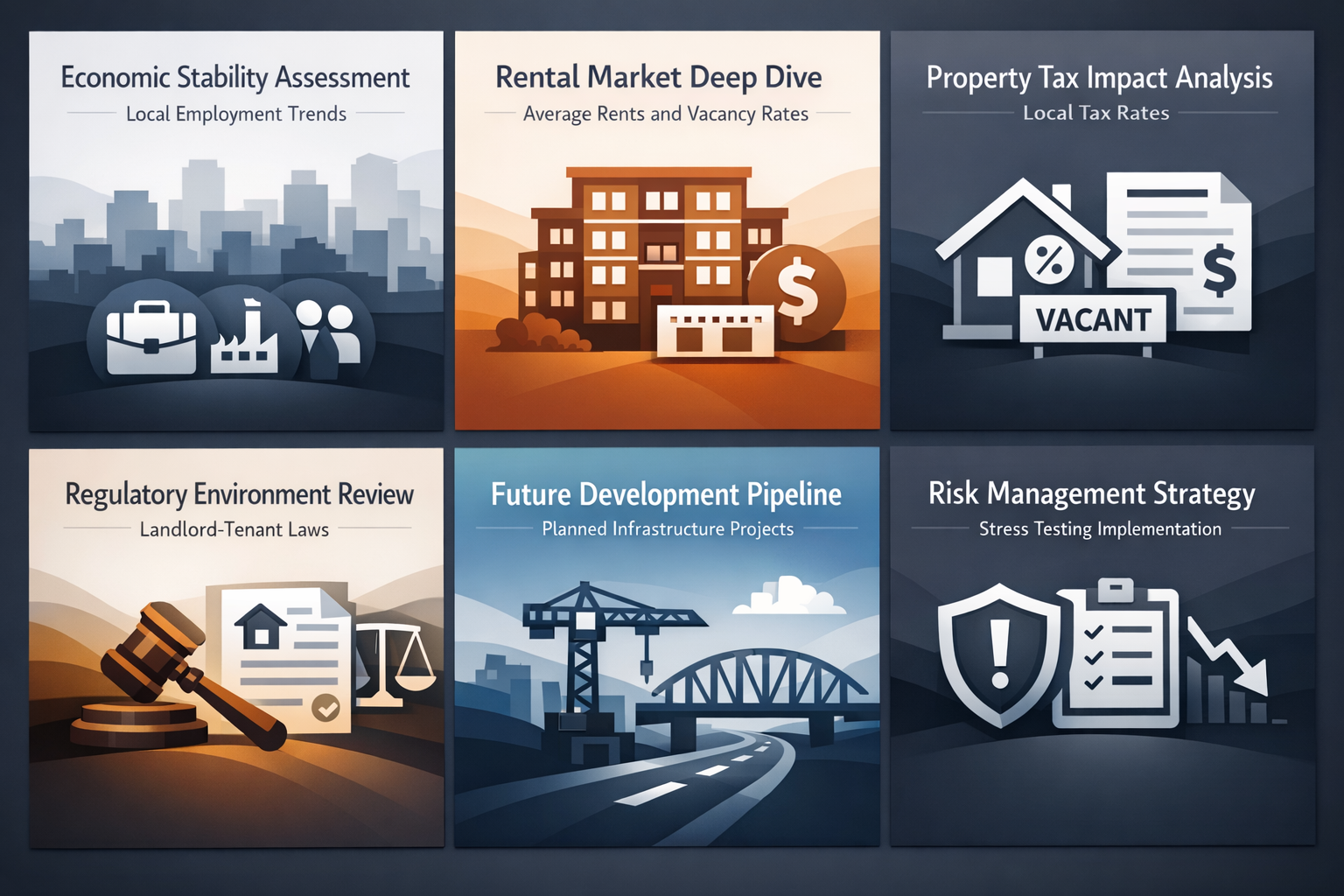
Economic Stability Assessment: Analyze local employment trends, major employers, and economic diversification to gauge the sustainability of rental demand that supports DSCR requirements.
Rental Market Deep Dive: Examine average rents, vacancy rates, and seasonal fluctuations to project realistic income streams that will satisfy debt service coverage ratios.
Property Tax Impact Analysis: Calculate how local property tax rates affect net operating income, as higher taxes can significantly impact DSCR calculations and overall investment returns.
Regulatory Environment Review: Evaluate landlord-tenant laws, rent control policies, and local regulations that might affect property management costs and rental income potential.
Future Development Pipeline: Research planned infrastructure projects, new construction, and economic development initiatives that could impact supply-demand balance and property values.
Risk Management in Evolving DSCR Markets
Risk management in evolving DSCR markets has become particularly important as the lending landscape adapts to new economic realities. The recommendation to maintain a 1.25 minimum DSCR provides investors with a crucial safety net against market volatility.
Stress Testing Implementation: Apply conservative rent projections and higher expense estimates to ensure properties can maintain positive cash flow even during economic downturns or unexpected cost increases.
Market Diversification Strategy: Spread investments across multiple markets and property types to reduce concentration risk, particularly important as DSCR lending products continue evolving through 2025-2026.
Compliance Vigilance: With growing investor activity increasing mortgage fraud risks, maintain rigorous documentation standards and work only with reputable lenders and partners to protect investment portfolios.
Financial Buffer Maintenance: Keep adequate reserves for property maintenance, vacancy periods, and market disruptions, ensuring DSCR ratios remain healthy even during challenging periods.
Regular Portfolio Review: Conduct quarterly assessments of market conditions and property performance to identify potential issues before they impact DSCR compliance or cash flow targets.
Exit Strategy Planning: Develop clear plans for refinancing or disposing of properties if market conditions change, particularly important given the predicted market volatility through 2026.
The best DSCR markets for cash flow in 2026 require careful selection based on solid fundamentals rather than speculation. As DSCR lending products continue evolving with new hybrid structures and expanded investor pools, successful real estate investors will focus on markets that demonstrate strong rental demand, reasonable acquisition costs, and sustainable economic growth. By implementing thorough market analysis, maintaining conservative DSCR ratios of at least 1.25, and staying vigilant about compliance requirements, investors can build resilient portfolios that generate consistent cash flow regardless of market conditions. The key is balancing opportunity with prudent risk management while leveraging the expanding financing options that make strategic market selection more important than ever.