Real estate investors often find themselves sitting on substantial equity in their rental properties, yet many struggle to identify the best cash out uses for rentals that will maximize their returns. Cash-out refinancing can unlock this trapped value, providing capital for strategic investments that enhance portfolio performance. Understanding how to leverage this equity effectively can mean the difference between modest gains and explosive portfolio growth.
With DSCR loan requirements potentially reaching 1.25 or higher for optimal rates, investors need to approach cash-out decisions strategically. The key lies in using extracted equity for purposes that either generate immediate cash flow improvements or position your portfolio for long-term appreciation.
Essential Property Enhancement Strategies
Property enhancement strategies represent some of the most effective ways to deploy cash-out refinancing proceeds. These improvements can significantly boost rental income and property values when executed properly.
High-ROI renovations: Kitchen and bathroom upgrades typically offer the strongest return on investment, often increasing rental rates by 15-25% while boosting property values
Energy efficiency improvements: Installing new HVAC systems, windows, or insulation can reduce operating costs while making properties more attractive to quality tenants
Curb appeal enhancements: Landscaping, exterior painting, and roofing improvements protect your investment while commanding higher rents in competitive markets
Unit conversion projects: Converting single-family homes to duplexes or adding accessory dwelling units can dramatically increase cash flow potential
Smart Debt Management Solutions
Smart debt management solutions using cash-out proceeds can improve your overall financial position and reduce carrying costs across your portfolio.
High-interest debt elimination: Pay off credit cards, personal loans, or other high-rate debt that may be constraining your cash flow and limiting future investment capacity
Portfolio loan consolidation: Combine multiple smaller loans into more manageable payment structures, particularly beneficial when interest rates are favorable
Bridge loan repayment: Clear expensive short-term financing used for previous acquisitions, replacing it with long-term, lower-cost mortgage debt
Private money payoffs: Refinance out of costly private lending arrangements that may have served their purpose during acquisition phases
Portfolio Expansion Opportunities
Portfolio expansion opportunities represent the most aggressive but potentially rewarding uses of cash-out refinancing proceeds for serious real estate investors.
Down payment funding: Use equity from performing properties to secure down payments on additional rental acquisitions, leveraging success to fuel growth
Market diversification: Deploy capital in different geographic markets to reduce concentration risk and capitalize on emerging opportunities
Property type expansion: Branch into multi-family properties, commercial real estate, or specialized niches like student housing or senior living facilities
Fix and flip capital: Allocate funds toward short-term renovation projects that can generate quick returns to reinvest in long-term holdings
Step-by-Step Cash Out Planning Process
A systematic cash out planning process ensures you make the most strategic decisions when leveraging your rental property equity.
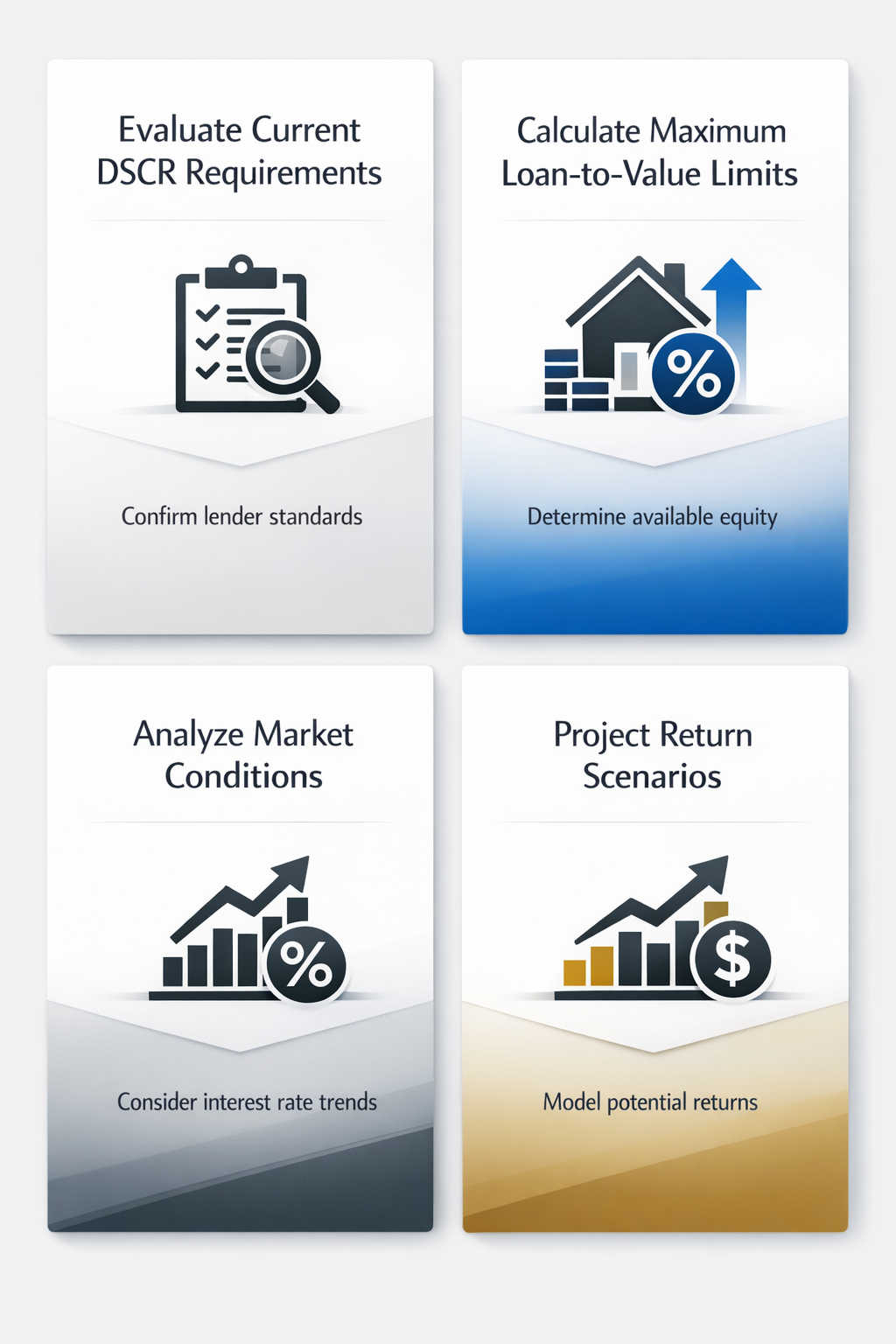
Evaluate current DSCR requirements: Confirm your properties meet lender standards, typically requiring debt service coverage ratios of 1.25 or higher for competitive terms
Calculate maximum loan-to-value limits: Most lenders cap cash-out refinancing at 75-80% LTV for investment properties, so determine your available equity accordingly
Analyze market conditions: Consider interest rate trends and local real estate cycles to time your refinancing for optimal terms and maximum benefit
Project return scenarios: Model potential returns from different uses of proceeds, comparing property improvements against acquisition opportunities or debt reduction benefits
Maximizing Returns Through Strategic Timing
Strategic timing can significantly impact the success of your cash-out refinancing strategy and the effectiveness of how you deploy the proceeds.
Market cycle positioning: Execute cash-out refinancing during favorable rate environments and deploy proceeds when property values offer the best acquisition opportunities
Seasonal considerations: Time property improvements during off-seasons when contractor costs may be lower, then capture higher rents during peak leasing periods
Portfolio performance alignment: Coordinate refinancing with lease renewals or rent increases to demonstrate strong cash flow when applying for new financing
Tax optimization timing: Structure improvements and acquisitions to maximize depreciation benefits and minimize tax implications from refinancing proceeds
Risk Management and Due Diligence
Proper risk management and due diligence protect your investment portfolio when deploying cash-out refinancing proceeds across various opportunities.
Cash flow stress testing: Ensure your debt service obligations remain manageable even if rental income decreases by 10-15% due to vacancy or market conditions
Market research validation: Thoroughly analyze target markets for acquisitions or improvement projects, focusing on employment growth, population trends, and rental demand indicators
Contractor and vendor vetting: For property upgrades, carefully select experienced professionals with strong references and appropriate licensing to avoid costly delays or substandard work
Exit strategy planning: Develop clear plans for how each use of proceeds will generate returns or provide portfolio benefits within your investment timeline
Key Takeaway for Rental Property Success
The most successful rental property investors view cash-out refinancing as a strategic tool rather than simply a way to access quick capital. With conforming loan limits reaching $832,750 in 2026, investors have greater leverage opportunities than ever before. However, the key to long-term success lies in deploying these proceeds toward initiatives that either increase cash flow, reduce risk, or position your portfolio for continued growth. Whether you choose property upgrades, down payments on new acquisitions, or debt consolidation, ensure each decision aligns with your overall investment strategy and risk tolerance. The best cash out uses for rentals are those that compound your returns over time while maintaining strong debt service coverage ratios that keep your financing options open for future opportunities.
Successfully leveraging cash-out refinancing requires careful planning, market awareness, and a clear understanding of your investment goals. The strategies outlined here provide a framework for making these critical decisions, but each investor's situation is unique. Consider working with experienced DSCR lenders who understand the nuances of investment property financing and can help structure loans that support your long-term objectives.
Remember that the best opportunities often require quick action, so having your financing relationships established and your strategy clearly defined will position you to capitalize when the right deals emerge. Whether you're upgrading existing properties, expanding your portfolio, or optimizing your debt structure, the key is maintaining focus on sustainable cash flow and long-term wealth building through strategic real estate investment.