Rate lock extension fees represent a significant but often overlooked expense for real estate investors. These fees can range from 0.25 percent to 1 percent of the loan principal, potentially adding thousands of dollars to your investment property financing costs. When closing delays occur, investors may find themselves facing these unexpected charges that can substantially impact their deal profitability. Understanding how to navigate and avoid these fees is crucial for maintaining healthy investment margins and ensuring successful property acquisitions.
Understanding Rate Lock Extension Fees and Their Impact
Rate lock extension fees and their impact on investment property financing requires careful consideration of timing and costs. These fees typically arise when standard rate lock periods, often around 30 days, expire before closing completion.
Fee Structure: Extension fees may range from 0.25 percent to 1 percent of the total loan amount, creating substantial additional costs for investors
Timing Challenges: Investment property transactions often face unique delays including extended appraisal periods, property condition assessments, and rental income verification processes
Lender Policies: Different lenders impose varying extension fee structures, making it essential to understand specific terms before committing to a loan
Budget Impact: On a $500,000 investment property loan, extension fees could add $1,250 to $5,000 in unexpected closing costs
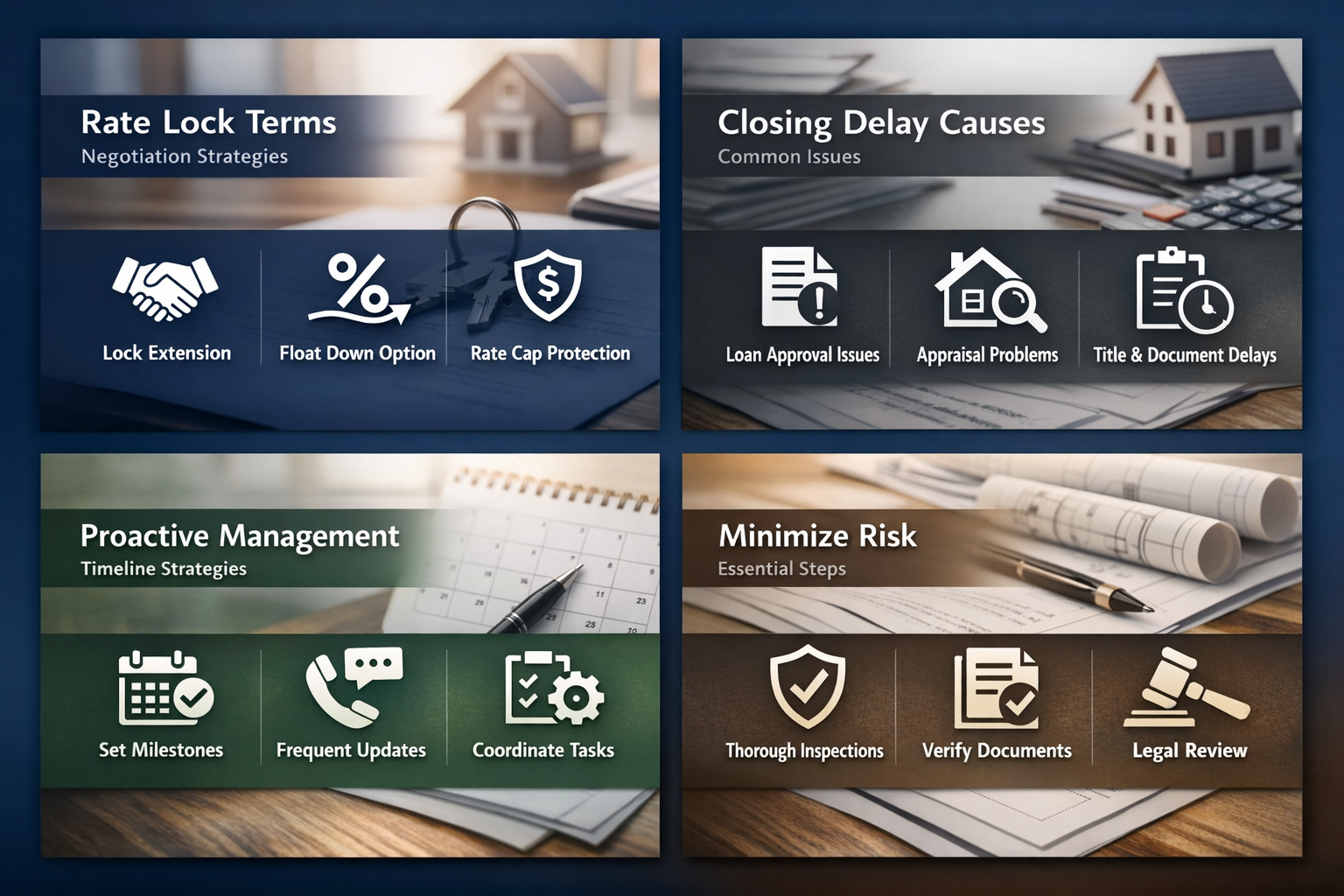
Common Causes of Closing Delays for Investment Properties
Common causes of closing delays for investment properties often stem from the unique complexities involved in investor-focused transactions. Understanding these potential obstacles helps investors plan more effectively.
Appraisal Complications: Investment properties may require specialized appraisers familiar with rental income analysis and comparable property evaluations
Documentation Requirements: DSCR loans and other investor products often involve additional paperwork verification that can extend processing timelines
Property Condition Issues: Inspection findings on investment properties might require additional negotiations or repairs that delay closing schedules
Title Complications: Rental properties may have more complex title histories, including previous landlord liens or tenant-related legal matters
Proactive Timeline Management Strategies
Proactive timeline management strategies can significantly reduce the likelihood of encountering lock expiration issues during your investment property acquisition process.
Early Documentation Preparation: Gather all required financial documents, property records, and investor qualification materials before initiating the loan application process
Lender Communication: Establish regular check-ins with your loan officer to monitor progress and identify potential bottlenecks before they cause delays
Professional Team Coordination: Work with experienced real estate agents, inspectors, and attorneys familiar with investment property transactions to minimize processing delays
Contingency Planning: Build buffer time into your closing timeline expectations, especially when dealing with complex investment property scenarios
Negotiating Rate Lock Terms and Pricing Protection
Negotiating rate lock terms and pricing protection upfront can provide valuable safeguards against unexpected extension fees and closing delay costs.
Extended Initial Locks: Request longer initial rate lock periods, such as 45 or 60 days, which may carry slightly higher costs but provide greater protection
Fee Waivers: Some lenders might waive extension fees for delays caused by their internal processing issues or third-party service providers
Graduated Fee Structures: Negotiate tiered extension fees where short delays carry minimal costs, with higher fees only applying to extended delays
Alternative Lender Comparison: Research multiple lenders' extension fee policies to identify those offering more favorable terms for investment property transactions
Essential Steps to Minimize Extension Fee Risk
Essential steps to minimize extension fee risk involve systematic preparation and strategic decision-making throughout your investment property financing process.
Choose Experienced Investment Lenders: Work with lenders specializing in DSCR loans, fix and flip financing, and rental property loans who understand typical investor timelines
Pre-Approve Documentation: Complete thorough pre-approval processes that verify all investor qualifications and property requirements before rate lock initiation
Monitor Critical Milestones: Track appraisal scheduling, inspection completion, and underwriting progress to identify potential delays early in the process
Maintain Realistic Expectations: Build appropriate timeline buffers into your investment strategy, recognizing that complex deals may require additional processing time
Consider Rate Lock Alternatives: Evaluate float-down options or other rate protection strategies that might better align with your specific transaction timeline needs
Successfully avoiding rate lock extension fees requires proactive planning, clear communication with your lending team, and realistic timeline expectations for your investment property transactions. By understanding the potential costs involved and implementing strategic management approaches, you can protect your investment margins while ensuring smooth closing processes. Working with experienced investment property lenders who understand the unique challenges facing real estate investors can make a significant difference in avoiding these costly surprises. Remember that while extension fees may sometimes be unavoidable, proper preparation and strategic planning can minimize their impact on your overall investment success.