Understanding the Automated Valuation Models Accuracy Debate in Real Estate Investment
The automated valuation models accuracy debate has reached a critical juncture for real estate investors. Recent industry challenges have exposed significant gaps in AVM reliability, raising concerns about their impact on DSCR loans, fix and flip financing, and rental property acquisitions. As these digital tools increasingly influence underwriting decisions, investors must understand the implications for their financing strategies and risk assessments.
The debate centers on whether AVMs can consistently deliver accurate property valuations across diverse market conditions. While these models offer speed and efficiency, growing evidence suggests they may systematically produce valuation errors that could affect loan terms and investment returns. For investors relying on precise valuations for financing decisions, understanding these limitations has become essential for protecting their portfolios.
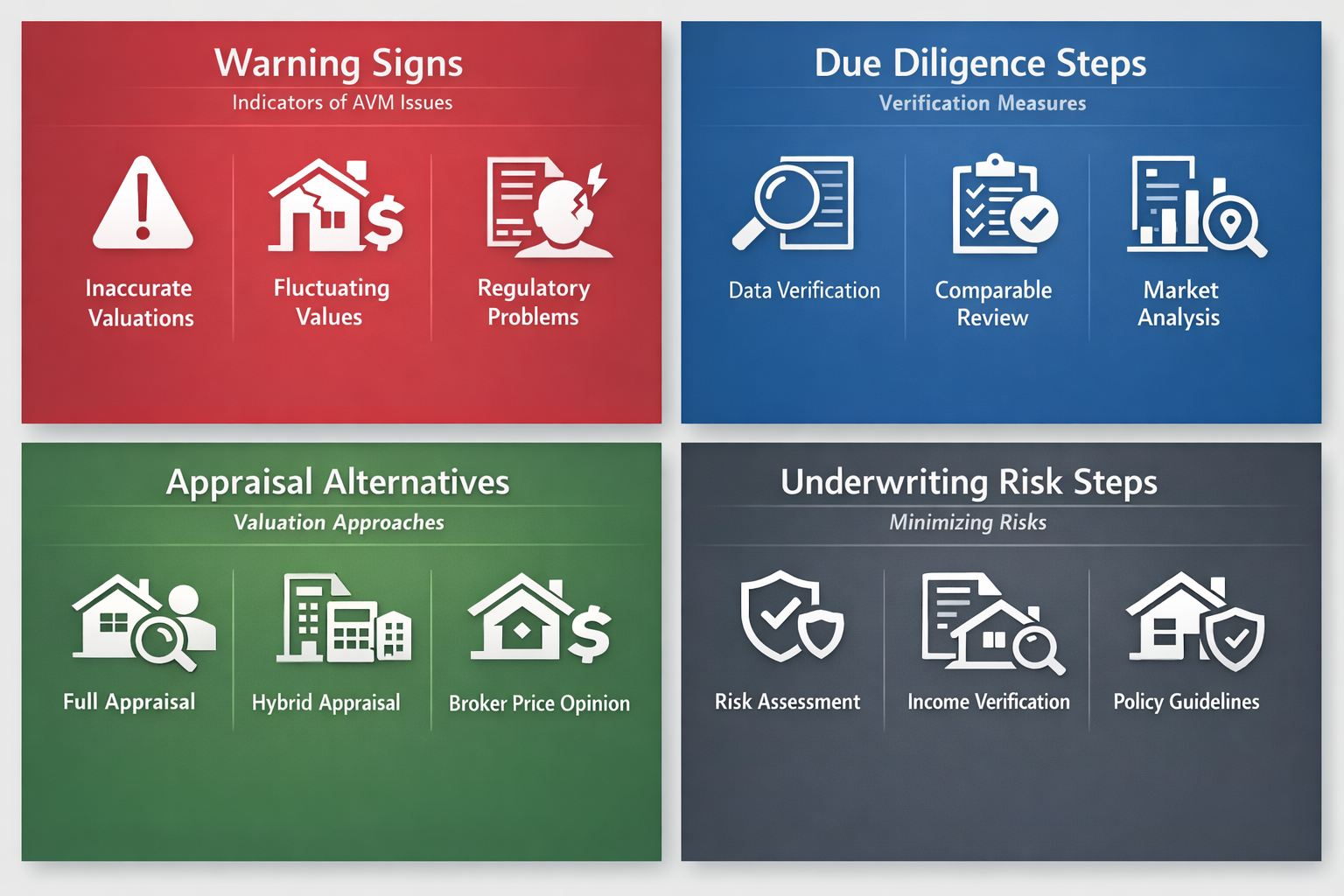
Key Warning Signs of AVM Reliability Issues
Identifying potential AVM reliability problems can help investors make more informed decisions about when to seek alternative valuation methods. Several indicators might signal that an automated valuation could be unreliable for your specific property or market conditions.
Significant discrepancies between AVM results and recent comparable sales in the same neighborhood
Properties in markets with limited recent sales data or unique architectural features that algorithms struggle to assess
Valuations that seem inconsistent with local market trends or economic conditions affecting the area
Properties in transitional neighborhoods where rapid changes may not be reflected in historical data
Essential Due Diligence Steps for AVM Results
Smart investors typically implement additional verification measures when working with automated valuations. These due diligence steps can help identify potential issues before they impact financing decisions or investment outcomes.
Cross-reference AVM results with recent broker price opinions or comparative market analyses from local real estate professionals
Review the underlying data sources and methodology used by the AVM provider to understand potential blind spots
Consider market-specific factors that automated models might miss, such as upcoming development projects or zoning changes
Evaluate whether the property type aligns with the AVM's typical accuracy range for similar assets in the area
Smart Appraisal Alternatives for Investment Properties
Diversifying valuation approaches can provide investors with more reliable property assessments, especially for complex investment scenarios. These appraisal alternatives offer different perspectives on property value that might complement or challenge AVM results.
Licensed appraisers who specialize in investment properties and understand rental income potential for DSCR loan calculations
Broker price opinions from agents with extensive experience in the specific market and property type
Real estate investment analysis tools that factor in cash flow projections and market rent comparisons
Drive-by appraisals or desktop reviews that combine automated data with professional judgment
Steps to Minimize Underwriting Risk with AVMs
Implementing a systematic approach to AVM usage can help investors reduce underwriting implications while maintaining efficiency in their deal evaluation process.
Establish clear confidence thresholds for when AVM results are acceptable versus when additional verification is needed
Develop relationships with multiple AVM providers to compare results and identify outliers that warrant further investigation
Create property-specific criteria that account for factors like age, condition, and local market dynamics that might affect AVM accuracy
Document your valuation methodology to ensure consistency across deals and facilitate better communication with lenders
Best Practices for Multi-Property Portfolio Analysis
Managing valuation accuracy across multiple properties requires a structured approach that balances efficiency with reliability. These practices can help investors maintain consistent standards while scaling their operations.
Segment properties by type and market characteristics to apply appropriate valuation methods for each category
Establish periodic review cycles to reassess property values using updated market data and methodology improvements
Track AVM accuracy over time by comparing initial estimates with actual transaction prices or refinance appraisals
Build contingency reserves that account for potential valuation discrepancies when planning financing and cash flow projections
Strategic Implications for Investment Decision Making
The ongoing automated valuation models accuracy debate highlights the need for investors to adapt their decision-making processes to account for technological limitations. While AVMs provide valuable efficiency gains, they shouldn't be the sole basis for major investment decisions. Successful investors are learning to balance speed with accuracy by implementing hybrid approaches that combine automated tools with human expertise. This balanced strategy helps protect against systematic valuation errors while maintaining the operational efficiency that modern real estate investment requires. Understanding these dynamics allows investors to negotiate better loan terms and make more informed acquisition decisions.
The automated valuation models accuracy debate reflects broader changes in how real estate investments are evaluated and financed. While these tools offer significant benefits in terms of speed and cost-effectiveness, recent industry analysis suggests they may not always capture the full complexity of property values. Investors who understand these limitations and implement comprehensive valuation strategies are better positioned to secure favorable financing terms and minimize risk.
Moving forward, the most successful investors will likely be those who leverage AVMs as part of a broader toolkit rather than relying on them exclusively. By combining automated efficiency with professional judgment and market expertise, investors can navigate the evolving landscape of property valuation while protecting their investment returns and financing opportunities.