Real estate investors often miss out on lucrative opportunities because they believe outdated or incorrect information about DSCR loans. These debt service coverage ratio loans have evolved significantly, yet many investors still operate under assumptions that may have been true years ago or were never accurate in the first place. Understanding the reality behind these 10 DSCR myths investors believe can unlock new financing possibilities and help you make more informed decisions about your rental property portfolio.
DSCR loans offer unique advantages that traditional financing simply can't match, but misconceptions about rates, requirements, and flexibility continue to hold investors back. Let's examine the most persistent myths and reveal what lenders actually look for when evaluating DSCR loan applications.
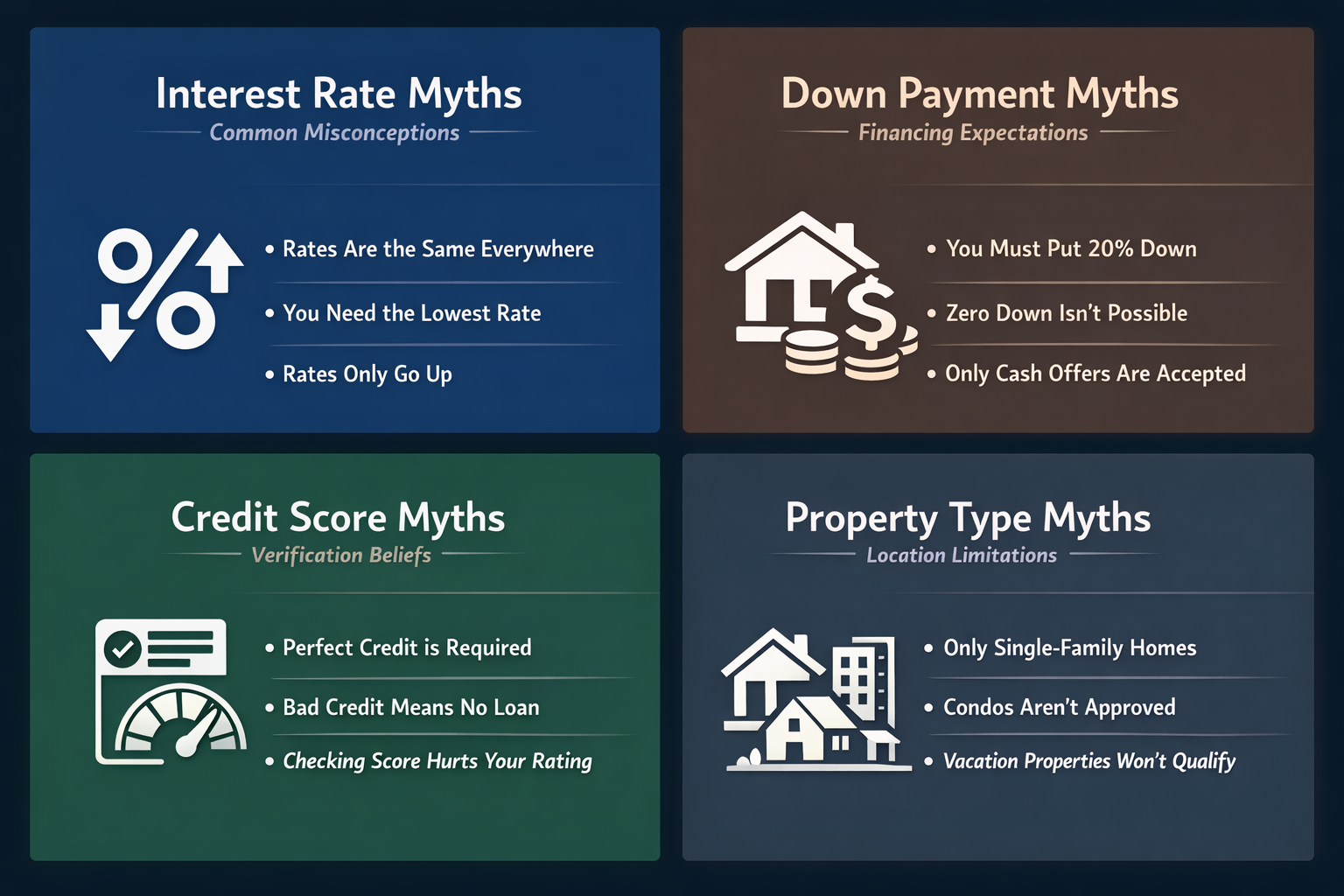
Interest Rate and Cost Misconceptions
Interest rate and cost misconceptions represent some of the most damaging beliefs that prevent investors from considering DSCR financing. Many assume these loans carry prohibitively high rates that eliminate profit margins, but this oversimplifies the rate landscape.
DSCR rates aren't drastically higher than conventional loans: While DSCR loans may carry a slight premium, the difference is often smaller than investors expect, especially when comparing to other investor-focused products
Rate premiums vary significantly by lender: Shopping multiple lenders can reveal competitive options that might surprise investors who assumed all DSCR products were expensive
Total cost includes more than interest rates: DSCR loans often reduce documentation requirements and processing time, which can lower overall transaction costs even with slightly higher rates
Market conditions affect all loan types: When conventional rates rise, DSCR loan rates may become relatively more attractive as the gap narrows between product types
Down Payment and Financing Amount Myths
Down payment and financing amount myths create unrealistic expectations that lead to application disappointment. These misconceptions often stem from outdated information or confusion with other loan programs.
DSCR loans don't offer 100% financing: Investors need to plan for substantial down payments, typically requiring 20-25% or more depending on the property type and lender requirements
Down payment requirements vary by property: Single-family rentals might have different down payment expectations compared to multi-unit properties or commercial real estate
Loan-to-value ratios have limits: Most DSCR lenders cap LTV ratios to manage risk, meaning investors can't leverage properties to the maximum like some other financing options might allow
Cash reserves may be required: Some lenders expect investors to maintain liquid reserves beyond the down payment, adding to the total capital requirements for DSCR financing
Credit Score and Income Verification Beliefs
Credit score and income verification beliefs often swing between two extremes, with investors either thinking credit doesn't matter at all or believing the requirements are impossibly strict. The reality lies somewhere in between these common misconceptions.
Credit scores still matter for DSCR loans: While income verification might be reduced, lenders typically maintain credit score requirements that investors need to meet for approval
Income documentation is simplified, not eliminated: DSCR loans reduce income verification complexity but don't completely ignore an investor's financial capacity outside the subject property
Credit requirements vary by lender: Different DSCR lenders maintain different minimum credit score thresholds, making it important to understand each lender's specific criteria
Credit history quality matters beyond scores: Lenders may examine credit patterns and previous mortgage payment history even when focusing primarily on property cash flow for qualification
Property Type and Location Limitations
Property type and location limitations often surprise investors who assume DSCR loans work identically across all real estate categories. These restrictions can significantly impact investment strategies if not understood upfront.
Not all property types qualify equally: DSCR lenders may have preferences for certain property types, with single-family homes often receiving more favorable terms than other rental property categories
Geographic restrictions may apply: Some DSCR lenders focus on specific markets or regions, potentially limiting options for investors looking at properties in certain locations
Occupancy requirements can be strict: Investment properties financed with DSCR loans typically cannot be used as primary residences, and lenders often verify this restriction carefully
Property condition standards exist: DSCR lenders may require properties to meet specific condition standards or may not finance properties that need substantial rehabilitation work
DSCR Ratio Calculation and Approval Standards
DSCR ratio calculation and approval standards create confusion because investors often misunderstand how lenders actually evaluate debt service coverage. These calculation myths can lead to poor property selection and failed applications.
DSCR calculations aren't always straightforward: Lenders may use different methods to calculate rental income, expenses, and debt service, leading to varying ratio results for the same property
Minimum DSCR ratios vary by lender: Some lenders accept ratios as low as 1.0, while others require 1.25 or higher, making lender selection crucial for borderline deals
Market rent vs. actual rent matters: Lenders might use market rent estimates rather than current lease amounts, which can help or hurt depending on the property's rental situation
Expense calculations include more than obvious costs: DSCR calculations typically include property taxes, insurance, and maintenance reserves, but lenders may have different assumptions about expense levels
Understanding the truth behind these common misconceptions can transform how you approach rental property financing. DSCR loans continue to evolve, with lenders developing hybrid products and adjusting their criteria based on market conditions. Rather than dismissing DSCR financing based on outdated assumptions, savvy investors research current offerings and compare multiple lenders to find the best fit for their portfolio strategy.
The key to successful DSCR financing lies in preparation and realistic expectations. Work with experienced lenders who can explain their specific requirements and help you structure deals that meet their underwriting standards. By separating fact from fiction, you'll be better positioned to leverage DSCR loans when they align with your investment goals and financial situation.